

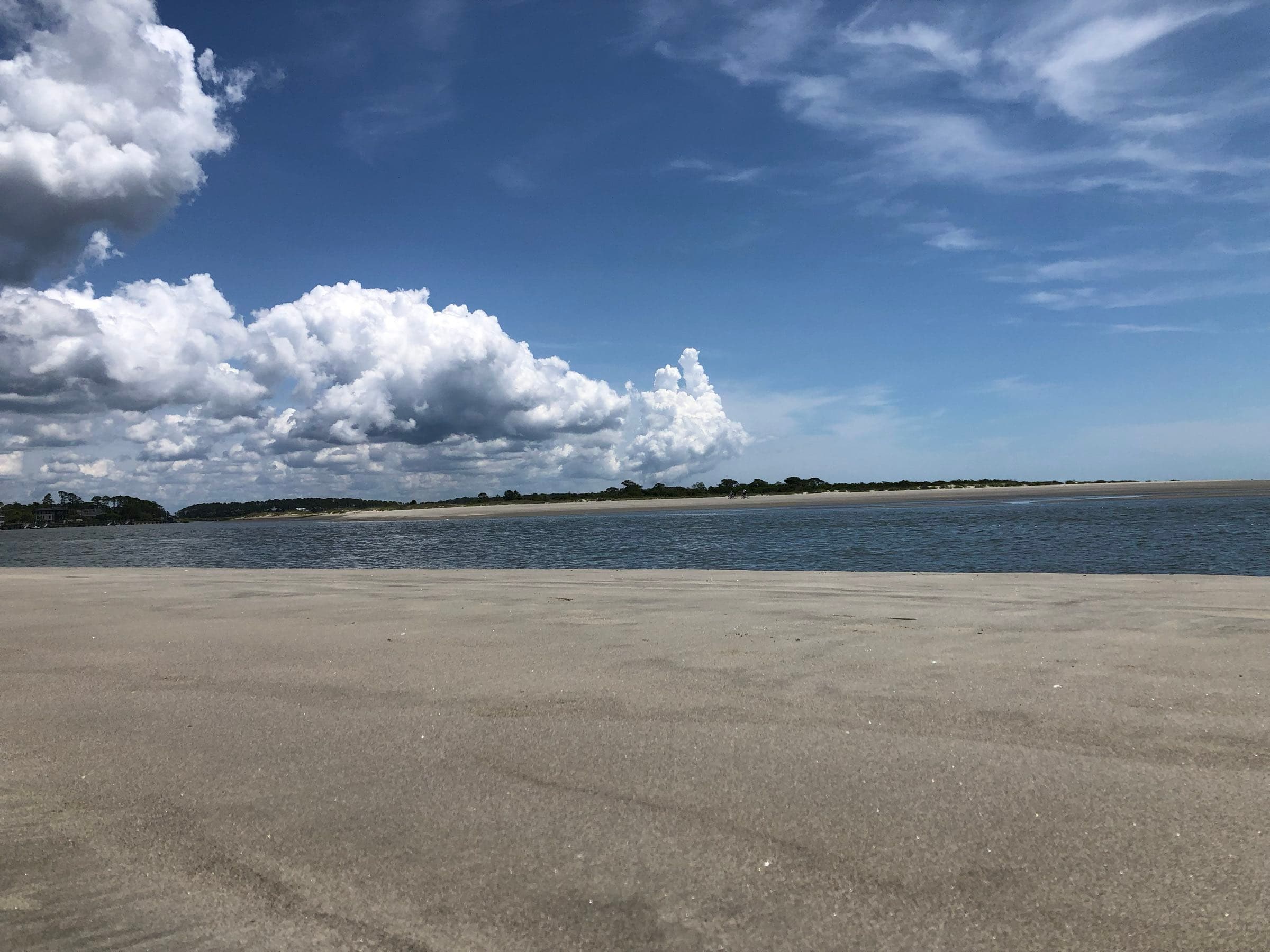
Fishing · Kiawah · Seabrook · Johns Island · Wadmalaw
Fishing the islands
The tide for the creek you’re on, the wind, the water and the moon, live from NOAA and the National Weather Service. Then every rule South Carolina sets on what you can keep, each one linked to the page that says so.
Last verified
Photo: chucka_nc, CC BY-SA 2.0, via Wikimedia Commons (resized)
Live on the islands
Reading the gauges…
Tide · Kiawah River
—ft
Reading NOAA…
NOAA Kiawah River Bridge (8667062)
Wind
—mph
Reading the NWS…
NWS KJZI
Water
—°F
Reading NOAA…
Moon & sun
—% lit
Computing…
Computed on your device
Today’s bite times
What solunar periods are
Solunar periods are a fishing tradition from the 1920s (John Alden Knight’s tables): the two hours around the moon passing overhead and underfoot are “major” periods, the hour around moonrise and moonset are “minor”, and days near the new and full moon are said to be better. No agency forecasts fish by it, and neither do we — the moon’s times here are real (computed on your device and checked against the U.S. Naval Observatory), the tradition is just a tradition.
Tide: NOAA CO-OPS predictions for Kiawah River Bridge (8667062), MLLW datum; the height now is read between NOAA’s highs and lows. Wind: National Weather Service, Charleston Executive Airport (KJZI), or NOAA Charleston Harbor when the airport doesn’t report. Water: NOAA CO-OPS 8665530. Offshore: NDBC buoy files, read every ten minutes by this site. Sun and moon: computed in your browser. Predictions are not observations; a strong wind can push the water higher or lower than predicted.
Guidance, not a promise
Where can you fish today?
Five ways to fish the islands, each read against the live wind, the NWS nearshore forecast, any advisory for the islands’ waters and the tide. The rules are printed below the calls — nothing hidden.
- …
Creeks & marsh
Boat or kayak in the tidal creeks behind the islands
- …
Docks, piers & landings
From a public dock, pier or landing — no boat
- …
The surf
From the beach, wading or on the sand
- …
Inlets & sandbars
The inlet mouths and bars, by boat or on foot at low water
- …
Nearshore, by boat
Beyond the bar, inside 20 nautical miles (NWS zone AMZ360)
Read from: no live wind · no seas forecast · reading NWS alerts · no tide reading · hourly forecast loading.
How the calls are made
| Option | Good to | Workable to | Tough to |
|---|---|---|---|
| Creeks & marsh | 15 mph | 22 mph | 30 mph |
| Docks, piers & landings | 20 mph | 28 mph | 40 mph |
| The surf | 10 mph | 15 mph | 25 mph |
| Inlets & sandbars | 12 mph | 18 mph | 25 mph |
| Nearshore, by boat | 10 mph | 15 mph | 20 mph |
- Past the Tough limit, the call is Stay in.
- Thunder in the next six hours of the NWS hourly forecast makes every option Tough at best. When thunder roars, go indoors.
- A gale, storm, tropical or special marine warning for the islands' waters keeps every boat option in.
- Gusts more than 10 mph over an option's Good limit count as sustained wind for that option.
- A small craft advisory for AMZ360 or Charleston Harbor keeps the nearshore option in.
- Forecast seas: 2 ft or less Good, 3 ft Workable, 4 ft Tough, 5 ft or more Stay in.
- A small craft advisory makes the inlets Tough at best.
- Wind from the sea at 10 mph or more against a falling (outgoing) tide moves the inlets one step tougher.
- Only the onshore part of the wind (from the sea onto the beach) counts against the surf; wind off the land counts as calm.
- A rip current, high surf or beach hazards statement makes the surf Tough at best.
These limits are this site’s rules of thumb for small boats, kayaks and wading, not a Coast Guard or NWS standard. The NWS sets its own small craft advisory criteria; the advisory itself is what the page reads. Lightning guidance: NWS lightning safety.
Built from the numbers above
Captain’s morning brief
The Johns Islander · dock report
Reading the gauges…
Written by code on your device from today’s readings — no person or AI wrote it, and a reading that’s missing is left out, never guessed.
NWS forecast · NOAA tides · the moon
The week ahead
The National Weather Service’s forecast for Kiawah Island, with each day’s tides at Kiawah River Bridge and the moon. Tap the station above to change the tides.
Forecast: National Weather Service, Charleston SC office (grid CHS 81,68). Nearshore: NWS marine forecast, zone AMZ360. Tides: NOAA CO-OPS 8667062. Moon and solunar periods computed in your browser.
SCDNR · SC Code Title 50 · NOAA Fisheries
Know the rules
If you’re 16 or older, you need a South Carolina Saltwater Recreational Fishing License to fish or to take oysters, clams, shrimp or crabs from salt water — from a boat, the beach, a dock or wading. It’s $15 a year for residents and $75 for nonresidents. Red drum changed on July 1, 2026: 1 per person a day, 2 per boat, in an 18–25 in. slot.
The license
Who needs one, and where to get it
- Who needs one. Anyone 16 or older who fishes or harvests anything from salt water — finfish, oysters, clams, shrimp or crabs — needs a Saltwater Recreational Fishing License, whether from shore, a boat, a private dock, a free public dock or wading. Sources: SCDNR 2026–27 Hunting & Fishing Guide, p. 46 · SCDNR 2026–27 Hunting & Fishing Guide, p. 108 · SCDNR saltwater fishing FAQ; checked October 13, 2026.
- Rods in a boat. A licensed angler may fish any number of rods, but no unlicensed angler may use any of them. Source: SCDNR 2026–27 Hunting & Fishing Guide, p. 108; checked October 13, 2026.
- No license needed. Under 16. Fishing from a licensed charter boat while it's under hire, or from a licensed public fishing pier. Crabbing with three or fewer drop nets, fold-up traps or hookless handlines. SC residents stationed out of state and home on leave. (Shrimp baiting needs its own license instead.) Sources: SC Code §50-9-710 · SC Code §50-9-715 · SCDNR 2026–27 Hunting & Fishing Guide, p. 8; checked October 13, 2026.
- No combination covers it. The Combination, Sportsman and Junior Sportsman licenses don't include saltwater fishing. Saltwater comes with its own license, the lifetime saltwater add-on, or the Senior (64 and up), Gratis and Disability licenses. Sources: SCDNR 2026–27 Hunting & Fishing Guide, p. 12 · SCDNR 2026–27 Hunting & Fishing Guide, p. 9 · SC Code §50-9-525; checked October 13, 2026.
- Where to buy. Online at GoOutdoorsSouthCarolina.com (SCDNR says to make sure the address is license.gooutdoorssouthcarolina.com), in the Go Outdoors SC app, from license vendors across the state, or at an SCDNR office — Charleston's is at 217 Fort Johnson Road. Licenses by phone: 803-734-4DNR. Saltwater and shrimp-baiting questions: 843-953-9300. Sources: SCDNR 2026–27 Hunting & Fishing Guide, p. 14 · SCDNR 2026–27 Hunting & Fishing Guide, p. 6 · SCDNR: buy a license; checked October 13, 2026.
License fees
July 1, 2026 to June 30, 2027
| License | Resident | Nonresident | Source |
|---|---|---|---|
| Saltwater fishing, annualGood for one year from the day you buy it. | $15 | $75 | Sources: SCDNR 2026–27 Hunting & Fishing Guide, p. 10 · SCDNR 2026–27 Hunting & Fishing Guide, p. 8; checked October 13, 2026. |
| Saltwater fishing, 3-year | $45 | — | Source: SCDNR 2026–27 Hunting & Fishing Guide, p. 10; checked October 13, 2026. |
| Saltwater fishing, 14-day | $10 | — | Source: SCDNR 2026–27 Hunting & Fishing Guide, p. 10; checked October 13, 2026. |
| Saltwater fishing, 7-day | — | $35 | Source: SCDNR 2026–27 Hunting & Fishing Guide, p. 10; checked October 13, 2026. |
| Saltwater fishing, 1-day | — | $10 | Source: SCDNR 2026–27 Hunting & Fishing Guide, p. 10; checked October 13, 2026. |
| Lifetime saltwater (ages 16–63) | $300 | — | Sources: SCDNR resident license prices · SC Code §50-9-520; checked October 13, 2026. |
| Senior lifetime (64 and older; includes saltwater) | $9 | — | Sources: SCDNR 2026–27 Hunting & Fishing Guide, p. 9 · SC Code §50-9-530; checked October 13, 2026. |
| Recreational crab trap endorsement (up to five traps) | $5 | $5 | Sources: SCDNR 2026–27 Hunting & Fishing Guide, p. 10 · SC Code §50-9-540; checked October 13, 2026. |
| Shrimp baiting license and tags, per season | $25 | $500 | Sources: SCDNR 2026–27 Hunting & Fishing Guide, p. 10 · SC Code §50-5-1100; checked October 13, 2026. |
A dash means SCDNR doesn’t sell that license to that group.
Size and bag limits, state waters
South Carolina’s limits from the shore out to three miles, from SCDNR’s 2026–27 guide and the SC Code. Total length is tip of the snout to the end of the tail; fork length stops at the fork.
| Species | Size | Per person | Per boat | Also |
|---|---|---|---|---|
| Red drum (redfish) | 18–25 in. total length (slot) | 1 a day | 2 a day | New July 1, 2026 (was 2 and 6, 15–23 in.). Rod and reel or gig only; no gigging December 1 – February 28. Possession is prohibited in federal waters. The online SC Code hasn't caught up yet; the Act and SCDNR's 2026–27 guide have. Sources: 2026 Act No. 231 (red drum limits, circle hooks), effective July 1, 2026 · SCDNR 2026–27 Hunting & Fishing Guide, p. 48 · SCDNR regulations guide 2026–27: finfish size & catch limits; checked October 13, 2026. |
| Spotted seatrout | 14 in. total length minimum | 10 a day | — | Rod and reel or gig only; no gigging December 1 – February 28. Sources: SCDNR 2026–27 Hunting & Fishing Guide, p. 48 · SC Code §50-5-1705 · SC Code §50-5-1710; checked October 13, 2026. |
| Flounder (southern, summer and gulf) | 16 in. total length minimum | 5 a day | 10 a day | Hook and line and gig count together. Limits set in 2021 (Act 91); a 2024 act removed their sunset, so they stay. No closed season. Sources: SCDNR 2026–27 Hunting & Fishing Guide, p. 48 · SC Code §50-5-1705 · SCDNR regulations guide 2026–27: finfish size & catch limits; checked October 13, 2026. |
| Sheepshead | 14 in. total length minimum | 10 a day | 30 a day | Sources: SCDNR 2026–27 Hunting & Fishing Guide, p. 48 · SC Code §50-5-1705; checked October 13, 2026. |
| Black drum | 14–27 in. total length (slot) | 5 a day | — | Sources: SCDNR 2026–27 Hunting & Fishing Guide, p. 48 · SC Code §50-5-1710; checked October 13, 2026. |
| Whiting, spot and Atlantic croaker | No minimum | 50 a day, combined | — | The combined limit applies to hook and line. Sources: SCDNR 2026–27 Hunting & Fishing Guide, p. 48 · SC Code §50-5-1705; checked October 13, 2026. |
| Cobia | 36 in. fork length minimum | 1 a day | 6 a day | North of 32°31.0′ N (Jeremy Inlet, Edisto Island) — these islands are north of it (NOAA's Kiawah River gauge sits at 32.60° N). South of the line: 3 a boat, and closed in state waters May 1–31. State waters also close when federal waters do. Rod and reel or gig only in state waters; sale prohibited. Sources: SCDNR 2026–27 Hunting & Fishing Guide, p. 49 · SC Code §50-5-1713 · SAFMC: cobia · NOAA tide station 8667062, Kiawah River Bridge (32.60° N); checked October 13, 2026. |
| Spanish mackerel | 12 in. fork length minimum | 15 a day | — | The same in federal waters. Sources: SCDNR 2026–27 Hunting & Fishing Guide, p. 49 · SAFMC: Spanish mackerel; checked October 13, 2026. |
| King mackerel | 24 in. fork length minimum | 3 a day | — | The same in federal waters. Sources: SCDNR 2026–27 Hunting & Fishing Guide, p. 49 · SAFMC: king mackerel; checked October 13, 2026. |
| Tarpon | 77 in. fork length minimum | 1 a day | — | Rod and reel only. Sources: SCDNR 2026–27 Hunting & Fishing Guide, p. 48 · SC Code §50-5-1705; checked October 13, 2026. |
| Atlantic sharpnose and bonnethead sharks | No minimum | 1 of each a day | — | Rod and reel or hand line only; no gigging sharks. Non-offset, non-stainless circle hooks except with flies or artificial lures. From shore, the limits apply to each angler. Sources: SCDNR 2026–27 Hunting & Fishing Guide, p. 52 · SCDNR 2026–27 Hunting & Fishing Guide, p. 46 · SC Code §50-5-2725; checked October 13, 2026. |
| Blacktip, blacknose, bull, finetooth, lemon, nurse, spinner, tiger and other allowed sharks | 54 in. fork length minimum | — | 1 a vessel a trip | Great, scalloped and smooth hammerheads: 78 in. fork length. Sources: SCDNR 2026–27 Hunting & Fishing Guide, p. 52 · NOAA Fisheries HMS recreational compliance guide (April 2025); checked October 13, 2026. |
| Prohibited sharks | Release at once, in the water | 0 | 0 | Atlantic angel, basking, bignose, dusky, Galapagos, shortfin and longfin mako, narrowtooth, night, oceanic whitetip, Caribbean reef, sandbar, sevengill, Caribbean sharpnose, silky, bigeye sixgill, sixgill, smalltail, bigeye thresher, bigeye sand tiger, sand tiger, whale and white sharks. Sources: SCDNR 2026–27 Hunting & Fishing Guide, p. 52 · SC Code §50-5-1705; checked October 13, 2026. |
Past three miles
Federal waters
- Who sets the rules. Past three miles, the South Atlantic Fishery Management Council and NOAA Fisheries set the rules; NOAA manages sharks, tunas and billfish directly. South Carolina makes the federal limits state law too, with its own exceptions for black sea bass, red snapper and other snapper-grouper. Sources: SAFMC regulations · NOAA Fisheries: Atlantic highly migratory species · SC Code §50-5-2730; checked October 13, 2026.
- Check before you run offshore. Seasons offshore open and close during the year (red snapper is the best known). SCDNR and the SAFMC both point anglers to the free Fish Rules app for current state and federal limits. Sources: NOAA Fisheries: South Atlantic seasonal closures · SCDNR regulations · Fish Rules app (linked by SCDNR and the SAFMC); checked October 13, 2026.
- Red drum stay inshore. Harvesting red drum in federal waters is prohibited. Source: SCDNR 2026–27 Hunting & Fishing Guide, p. 47; checked October 13, 2026.
- Tunas, billfish and swordfish. These need a federal highly migratory species permit, in state waters too; sharks in state waters don't. Sources: SCDNR 2026–27 Hunting & Fishing Guide, p. 46 · NOAA Fisheries HMS recreational compliance guide (April 2025); checked October 13, 2026.
Kiawah · Seabrook
Island rules on top of the state's
- Kiawah's beach. A saltwater license is required for all recreational fishing. No chumming on or within 600 feet of the beach. Town officers may order beach fishing to stop for public safety. The Town adopts every SCDNR size and bag limit. Harassing marine mammals — including disrupting their feeding — is banned. May 1 to October 31, no unfiltered light on the beach from 9 p.m. to dawn, headlamps included. Sources: Town of Kiawah Island: beach regulations · Town of Kiawah Island Ordinance 2026-06 (fish and wildlife) · Town of Kiawah Island Ordinance 2025-09 (beach management); checked October 13, 2026.
- Kiawah's ponds. The Kiawah Island Community Association: no crabbing in any pond (crab only in the marsh); no swimming, wading, kayaking or paddleboarding in the ponds; a state license is required; catch and release is strongly encouraged. Source: Kiawah Island Community Association: fishing on Kiawah (June 30, 2026); checked October 13, 2026.
- Seabrook's beach. No chumming on or within 600 feet of the beach, and Town officers can order fishing to stop. From October 15, 2026, the beaches close sunset to sunrise during the sand-scraping project. Sources: Town of Seabrook Island Code, ch. 32 (beach restrictions) · Town of Seabrook Island announcements, October 2026; checked October 13, 2026.
Beyond hook and line
Oysters, crabs, shrimp and gigging
Oysters & clams
The shellfish season
- The 2026–27 season. Recreational oyster and clam harvest opens a half hour before sunrise on Thursday, October 1, 2026 and runs through May 15, 2027, unless conditions warrant a change. SCDNR sets the season each year inside a window the law fixes at September 16 to May 15, and can open or close any area at any time. Sources: SCDNR news release, Sept. 25, 2026: shellfish season · SC Code §50-5-985; checked October 13, 2026.
- License. A Saltwater Recreational Fishing License is required to harvest shellfish. Source: SCDNR news release, Sept. 25, 2026: shellfish season; checked October 13, 2026.
- Limits. Two U.S. bushels of oysters or a half bushel of clams (or both) per person per day; no more than three personal limits per boat or vehicle; and no more than two harvest days in any seven. A U.S. bushel is eight gallons. Sources: SC Code §50-5-960 · SCDNR news release, Sept. 18, 2025: shellfish season; checked October 13, 2026.
- Clam size. A clam less than one inch thick goes straight back to the bottom. Source: SC Code §50-5-990; checked October 13, 2026.
- Daylight only. No harvesting from a half hour after sunset to a half hour before sunrise. Source: SC Code §50-5-985; checked October 13, 2026.
- Where. Recreational harvest is on State Shellfish Grounds (marked S on SCDNR's maps) and Public grounds (marked R). Culture-permit grounds need the permit holder's written permission. Grounds near the islands include R-186 Kiawah River, S-194E and S-194W (East and West Kiawah River), S-187 Bohicket Creek, Leadenwah Creek (R-173, R-174, R-175, S-182), S-161 Steamboat Creek, S-168 Toogoodoo Creek and S-189 Snake Island. SCDNR asks harvesters to get the current maps at the start of each season; printed maps: (843) 953-9854. Sources: SCDNR shellfish regulations · SCDNR shellfish grounds, southern Charleston County · SCDNR shellfish ground maps · SCDNR news release, Sept. 18, 2025: shellfish season; checked October 13, 2026.
- Closures. Closures come from the SC Department of Environmental Services: call 1-800-285-1618 or check its interactive map before you go. Heavy rain closes grounds (Conditionally Approved areas close after 1.0–1.4 inches in 24 hours and stay closed at least 14 days), and a hurricane warning closes every open area in the warned area. Sources: SCDNR news release, Sept. 25, 2026: shellfish season · SC Department of Environmental Services shellfish closure map · SCDES shellfish area closure and opening procedures; checked October 13, 2026.
- Gear. Hand tongs, rakes (not bull rakes) and forks (not seed forks) by hand are recreational gear under the law; scoops, scrapes and dredges need a permit. SCDNR asks harvesters to cull in place, leaving dead shell and small oysters on the shoreline. Sources: SC Code §50-5-330 · SCDNR shellfish regulations · SCDNR news release, Sept. 25, 2026: shellfish season; checked October 13, 2026.
Blue crabs
Traps, lines and limits
- License. A Saltwater Recreational Fishing License is required to crab — except with three or fewer drop nets, three or fewer fold-up traps, or three or fewer handlines with no hooks (one bait per line, "chicken necking"). Source: SCDNR regulations guide 2026–27: licenses; checked October 13, 2026.
- Traps. Two crab traps per person without an endorsement; up to five with a recreational crab trap endorsement ($5 a year). Sources: SC Code §50-5-330 · SCDNR regulations guide 2026–27: license fees · SCDNR news release, Aug. 30, 2024: blue crab rules effective July 1, 2025; checked October 13, 2026.
- Buoys. Every trap's float must be yellow and carry the owner's name and current address; nonspherical floats at least 10 by 5 inches, round ones at least 6 inches; no jugs, bottles or floating line. An unmarked trap is contraband. Sources: SC Code §50-5-550 · SCDNR regulations guide 2026–27: crustacean & shellfish methods; checked October 13, 2026.
- Escape rings. Recreational traps need at least two unobstructed round escape rings, 2 3/8 inches or larger, year round (at least one in the upper chamber); single-chamber traps at least one. Sources: SC Code §50-5-545 · SCDNR news release, Aug. 30, 2024: blue crab rules effective July 1, 2025; checked October 13, 2026.
- Where and how long. No trap within 600 feet of a public boat ramp, none left dry at any tide, and none unattended more than five days. Source: SC Code §50-5-555; checked October 13, 2026.
- Limits. One bushel of blue crabs per person per day, two bushels per boat. Crabs must be at least 5 inches spine to spine. Sources: SC Code §50-5-1302 · SC Code §50-5-1310 · SCDNR news release, Aug. 30, 2024: blue crab rules effective July 1, 2025; checked October 13, 2026.
- Egg-bearing crabs. A sponge (egg-bearing) crab, or a female with the sponge removed, goes back in the water immediately. Source: SC Code §50-5-1300; checked October 13, 2026.
- Someone else's trap. Never pull another person's trap or take its catch unless the owner is there or has given you written permission. Sources: SC Code §50-5-330 · SC Code §50-5-555; checked October 13, 2026.
Shrimp
Baiting, cast nets and limits
- Baiting season. Shrimp baiting is open from noon September 11 to noon November 9, 2026, per SCDNR's 2026–27 guide. The law has SCDNR set a 60-day season each year between September 1 and November 15. Sources: SCDNR regulations guide 2026–27: crustaceans & shellfish limits · SC Code §50-5-1100; checked October 13, 2026.
- Baiting license. A shrimp baiting license with its ten pole tags costs $25 for residents and $500 for nonresidents. Source: SC Code §50-5-1100; checked October 13, 2026.
- Poles. Poles no more than an inch thick, driven in, each with its SCDNR tag and reflective tape; ten poles per boat per day, the set no more than 100 yards end to end, sets at least 25 yards apart, never unattended, and none within 50 yards of a dock, public landing or ramp. Shrimp only over your own poles. Source: SC Code §50-5-1100; checked October 13, 2026.
- Limit. 48 quarts of whole shrimp or 29 quarts headed, per boat (or per person without a boat) per day — the same for each set of baiting poles. December 16 through April 30, twelve dozen. Source: SC Code §50-5-1105; checked October 13, 2026.
- Cast nets. A cast net over bait must have mesh of at least a half inch square (one inch stretched). The saltwater license covers shrimping with a cast net. Sources: SC Code §50-5-1110 · SCDNR regulations guide 2026–27: licenses; checked October 13, 2026.
- Not allowed. Shrimp traps and pots are illegal. Trawling for personal use needs the same commercial licenses, areas and seasons as commercial trawling. Sources: SC Code §50-5-1100 · SCDNR regulations guide 2026–27: crustacean & shellfish methods; checked October 13, 2026.
Flounder
Gigging
- At night only. Gigging flounder in salt water is illegal during daylight (sunrise to sunset), and needs a Saltwater Recreational Fishing License. Sources: SC Code §50-5-581 · SCDNR regulations guide 2026–27: general information; checked October 13, 2026.
- Same limits as hook and line. Five flounder per person per day, ten per boat, at least 16 inches — the limit counts gig and hook-and-line together. Sources: SC Code §50-5-1705 · SC Code §50-5-1710; checked October 13, 2026.
- Not these. No gigging red drum or spotted seatrout from December 1 through the end of February, and no gigging sharks. Sources: SC Code §50-5-1705 · SCDNR regulations guide 2026–27: general information; checked October 13, 2026.
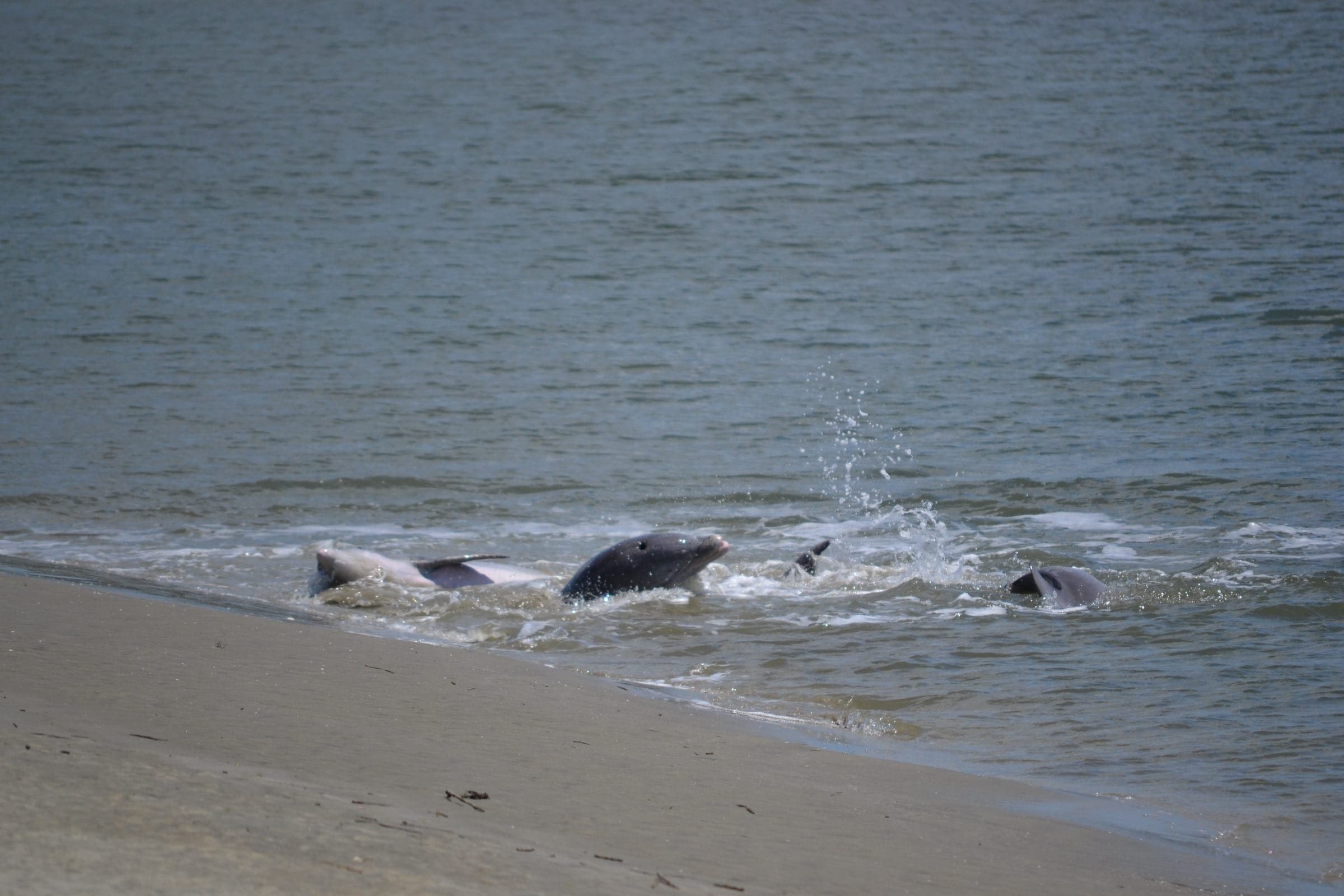
Bottlenose dolphins strand feeding on Seabrook Island
Photo: chucka_nc, CC BY-SA 2.0, via Wikimedia Commons (resized)
Share the water
Dolphins, turtles, birds — and the fish you let go
Protected wildlife
What the law says, and who to call
- Never feed or chase a dolphin. Feeding or harassing wild dolphins is illegal under the federal Marine Mammal Protection Act (civil penalties up to $36,498 and up to a year in prison), and South Carolina law separately makes it a crime to catch, feed or harass a dolphin. NOAA's guideline is to stay at least 50 yards away. Sources: NOAA Fisheries: feeding or harassing wild marine mammals · SC Code §50-5-2517 · NOAA Fisheries: protect wild dolphins, admire them from a distance; checked October 13, 2026.
- Around anglers' bait. NOAA asks anglers not to cast when a dolphin or sea turtle is nearby, to move if one takes interest in your bait or catch, and never to throw bait or scraps in the water. Source: NOAA Fisheries: fishing tips to protect sea turtles and marine mammals; checked October 13, 2026.
- Strand feeding at Captain Sams Inlet. Seabrook Island asks viewers on land to stay at least 15 yards from the water line and boats at least 50 yards off; swimming in Captain Sams Inlet is unlawful from two hours before to two hours after low tide or whenever dolphins are present ($500 fine, up to 30 days). Kiawah asks people to stay 75 feet from strand-feeding dolphins. Sources: Town of Seabrook Island: dolphin education program · Town of Kiawah Island: marine mammals; checked October 13, 2026.
- A hooked sea turtle. Call SCDNR's 24-hour hotline, 1-800-922-5431. Don't lift the turtle by the line; use a net or lift by the shell, cut the line leaving at least two feet, and leave the hook in place — NOAA says pulling it can do more harm. Sources: SCDNR sea turtle stranding network · NOAA Fisheries: fishing tips to protect sea turtles and marine mammals; checked October 13, 2026.
- A hooked bird. Don't cut the line. Reel in slowly, net the bird, hold the bill and cover its head and eyes with a cloth, snip the barb and back the hook out; if it's swallowed, cut the line close and leave the hook. For a badly hurt bird NOAA says to call the local game warden — SCDNR's 24-hour line is 1-800-922-5431. Sources: NOAA Fisheries: seabird protection and avoidance tips · SCDNR phone directory; checked October 13, 2026.
- Report a violation. SCDNR (Operation Game Thief): 1-800-922-5431. Marine mammal harassment: NOAA's enforcement hotline, (800) 853-1964. Sea turtle or marine mammal in trouble: the Southeast hotline, 1-877-942-5343, or SCDNR. Sources: SCDNR phone directory · NOAA Fisheries: feeding or harassing wild marine mammals · NOAA Fisheries: fishing tips to protect sea turtles and marine mammals; checked October 13, 2026.
Release
Circle hooks, descending devices and handling
- Circle hooks for gamefish (new in 2026). Since July 1, 2026, fishing for saltwater gamefish with natural bait on a hook 4/0 or larger in South Carolina means a non-offset, non-stainless steel circle hook. Smaller hooks and artificial lures are exempt. Source: 2026 Act No. 231 (red drum limits, circle hooks), effective July 1, 2026; checked October 13, 2026.
- Descending devices offshore. In South Atlantic federal waters, every boat fishing for snapper and grouper — private boats included — must have a descending device rigged and ready (at least 16 ounces of weight and 60 feet of line), and must use non-offset, non-stainless circle hooks with natural bait north of 28° N. Sources: NOAA Fisheries bulletin FB20-038: snapper-grouper gear, effective July 15, 2020 · SAFMC: best fishing practices; checked October 13, 2026.
- Sharks. Federal shark permit holders fishing recreationally must use non-offset, non-stainless steel circle hooks, except with flies or artificial lures. Source: NOAA Fisheries: recreational shark fishing circle-hook rule; checked October 13, 2026.
- Handling a fish you'll release. SCDNR's red drum advice: take the hook out while the fish is still in the water if you can, support it under the belly if you lift it, and hold it in the water until it swims off. Source: SCDNR: catch and release for red drum; checked October 13, 2026.
Public places, from the agencies that run them
Where to fish
Beaches, piers, docks and landings open to the public on and near the islands — who can use each, parking, fees, hours and its own rules. We don’t say what bites where; no agency publishes that. Each spot’s button sets the live panel to its nearest NOAA tide station. For beach parking by month and the county Gold Pass, see beach access.
Surf · Kiawah Island
Kiawah Beachwalker Park
8 Beachwalker Dr, Kiawah Island, SC 29455
- Who
- The public — it's the only public beach access on Kiawah.
- Parking
- 150 spaces, $5–$25 a car depending on month and day; usually full by mid-morning in summer. Walk-ins, bikes and Gold Pass holders free.
- Fees
- Parking only.
- Hours
- October–March 9 a.m. to sunset; May through Labor Day 9 a.m.–8 p.m.
- Rules
- No fishing in the designated swimming area. The Town of Kiawah requires a saltwater license, bans chumming on or within 600 feet of the beach, lets its officers stop beach fishing for public safety, and from May 1 to October 31 bans unfiltered lights on the beach — headlamps included — from 9 p.m. to dawn (red light is allowed).
Inlet · Between Kiawah and Seabrook
Captain Sams Inlet
Kiawah's west end, past Beachwalker Park; Seabrook's north beach
- Who
- On Kiawah, the beach west of Beachwalker Park — the Town's Critical Habitat area. Seabrook's side is behind its gate.
- Parking
- None of its own — Beachwalker Park on Kiawah.
- Fees
- None published beyond Beachwalker's parking.
- Hours
- Seabrook's beaches are closed from sunset to sunrise from October 15, 2026, while its sand-scraping project runs (expected through December 31, 2026).
- Rules
- Dolphins strand-feed here. No wading or swimming in the inlet (Kiawah); on Seabrook's side, no swimming from two hours before to two hours after low tide or whenever dolphins are present. Stay 15 yards from the water line (Seabrook) or 75 feet (Kiawah) when they feed, and never feed them. No pets in Kiawah's Critical Habitat or from Seabrook's Boardwalk 1 to the inlet. Both towns ban chumming within 600 feet of the beach.
Surf · Seabrook Island
Seabrook Island beach
Behind the Seabrook Island gate
- Who
- Property owners and guests with a visitor pass; the Town doesn't control the gate — ask the Seabrook Island Property Owners Association, (843) 768-0061.
- Parking
- No public parking published.
- Fees
- Not published.
- Hours
- From October 15, 2026, the beaches are closed from sunset to sunrise during the sand-scraping project (expected to finish by December 31, 2026).
- Rules
- No chumming on or within 600 feet of the beach, and Town officers can order fishing to stop for public safety. A Town committee's May 14, 2026 agenda proposed more (no fishing within 50 feet of dolphins, four poles per person, staying within 25 feet of your poles, no shark fishing); we couldn't confirm any was adopted.
Landing · Wadmalaw Island · Bohicket Creek
Cherry Point Landing and pier
2741 Cherry Point Rd, Wadmalaw Island, SC 29487
- Who
- The public; owned by Charleston County, kept by Charleston County Parks.
- Parking
- 20 gravel trailer spaces; SCDNR lists 15 spaces at the pier.
- Fees
- Not published.
- Hours
- Not published.
- Rules
- Two launch lanes, a courtesy dock and a fishing pier. Charleston County's landing rules: no tying to the floating dock more than 15 minutes, no swimming, no cleaning or dumping fish, shrimp, crabs or oysters at the landing, parking for active landing users only (72 hours at most; no cars without trailers in trailer spaces on weekends and holidays), no alcohol.
Landing · Johns Island · Stono River
John P. Limehouse Landing
395 Main Rd, Johns Island
- Who
- The public; owned by Charleston County, kept by Charleston County Parks.
- Parking
- 20 gravel trailer spaces.
- Fees
- Not published.
- Hours
- Not published.
- Rules
- Four launch lanes, a courtesy dock and a fishing pier, on the Stono River and the Intracoastal Waterway. Charleston County's landing rules: no tying to the floating dock more than 15 minutes, no swimming, no cleaning or dumping fish, shrimp, crabs or oysters at the landing, parking for active landing users only (72 hours at most; no cars without trailers in trailer spaces on weekends and holidays), no alcohol.
Pier & dock · James Island · Stono River
Sol Legare (Battery Island) Landing and fishing pier
2445 Sol Legare Rd, James Island
- Who
- The public.
- Parking
- 50 trailer spaces at the landing; 20 at the fishing pier and crabbing dock.
- Fees
- The fishing pier and crabbing dock are free.
- Hours
- The pier is open year round.
- Rules
- A two-lane ramp with a courtesy dock, and a separate fishing pier and crabbing dock. Charleston County's landing rules: no tying to the floating dock more than 15 minutes, no swimming, no cleaning or dumping fish, shrimp, crabs or oysters at the landing, parking for active landing users only (72 hours at most; no cars without trailers in trailer spaces on weekends and holidays), no alcohol.
Pier & dock · James Island · a tidal creek of the Stono
James Island County Park fishing and crabbing dock
871 Riverland Dr, Charleston, SC 29412
- Who
- The public, with park admission. The dock is accessible.
- Parking
- In the park, about a quarter mile from the dock.
- Fees
- $2 a person; Gold Pass holders and children 2 and under free.
- Hours
- September–October 8 a.m. to sunset, November–December 8 a.m.–5 p.m., January–April 8 a.m. to sunset, May–August 8 a.m.–8 p.m.; the gate closes 30 minutes before closing.
- Rules
- A saltwater license is required to fish the tidal creeks (crabbing with three or fewer drop nets or hookless lines is exempt under state law).
Pier & dock · Folly Beach · the ocean
Folly Beach Pier (Edwin S. Taylor Folly Beach Fishing Pier)
101 East Arctic Ave, Folly Beach, SC 29439
- Who
- The public, with a daily fishing pass bought in the pier's gift shop (cashless).
- Parking
- $5–$25 a car by season and day; no RVs or buses. Walk-ins and bikes free.
- Fees
- Daily fishing pass $7 adults; $4 for 12 and under, 60 and over, and active or retired military. Rod rental $15 plus a $25 deposit. Annual pier pass $60 plus tax ($40 for 60+ and 12 and under).
- Hours
- April–October 6 a.m.–10 p.m.; November and March 7 a.m. to sunset; December–February 8 a.m. to sunset — and no fishing on the pier after sunset. Closed Thanksgiving, Christmas Eve, Christmas Day and New Year's Day.
- Rules
- Two rods each; hooks 4/0 or smaller; no steel or wire leaders for bottom fishing; no landing nets for crabbing; cast nets only where they don't disrupt others; release any fish or ray you won't eat; no pets; no swimming or surfing within 200 feet. Intentional shark fishing is banned from 3rd Street West to 3rd Street East (up to $500 and/or 30 days). SCDNR exempts anglers on a licensed public pier from the saltwater license; the County's pages don't say whether this pier is licensed.
Landing · Folly Beach · Folly River
Folly River Landing
97 Center St, Folly Beach
- Who
- The public; owned by Charleston County, kept by Charleston County Parks.
- Parking
- 60 paved trailer spaces; no cars without trailers in trailer spaces, any day.
- Fees
- Not published.
- Hours
- Not published.
- Rules
- Four launch lanes and a courtesy dock. Charleston County's landing rules: no tying to the floating dock more than 15 minutes, no swimming, no cleaning or dumping fish, shrimp, crabs or oysters at the landing, parking for active landing users only (72 hours at most; no cars without trailers in trailer spaces on weekends and holidays), no alcohol.
Surf · Folly Beach · east end
Lighthouse Inlet Heritage Preserve
E Ashley Ave, Folly Beach
- Who
- The public; open for beach and surf fishing.
- Parking
- No accessible parking; no restrooms.
- Fees
- $1 a person; Gold Pass holders and children 2 and under free.
- Hours
- Sunrise to sunset.
- Rules
- A saltwater license is required. No swimming or wading, and no pets.
Surf · Edisto Island
Botany Bay Plantation Wildlife Management Area
Botany Bay Road, Edisto Island
- Who
- The public, with a free day-use pass filled out at the entrance.
- Parking
- 30 dirt spaces; a quarter-mile walk across the causeway to the beach.
- Fees
- No fee published; the day-use pass is required.
- Hours
- An hour before sunrise to an hour after sunset; closed to all public access on Tuesdays.
- Rules
- Shore fishing, shrimping and crabbing only on the front beach and in designated areas. No dogs on the beach or the causeway.
Landing · Edisto Island · Steamboat Creek
Steamboat Landing and pier
7626 Steamboat Landing Rd, Edisto Island
- Who
- The public; owned by Charleston County, kept by Charleston County Parks.
- Parking
- Limited gravel parking.
- Fees
- Not published.
- Hours
- Not published.
- Rules
- Two launch lanes and a fishing pier, onto Steamboat Creek and the North Edisto. Charleston County's landing rules: no tying to the floating dock more than 15 minutes, no swimming, no cleaning or dumping fish, shrimp, crabs or oysters at the landing, parking for active landing users only (72 hours at most; no cars without trailers in trailer spaces on weekends and holidays), no alcohol.
Surf · Edisto Beach
Edisto Beach State Park
Edisto Beach State Park, Edisto Island
- Who
- The public, with park admission.
- Parking
- In the park.
- Fees
- $8 adults, $5 SC seniors, $4 ages 6–15.
- Hours
- 7 a.m.–6 p.m. daily, to 8 p.m. during daylight saving time.
- Rules
- A mile and a half of beach open to surf fishing; no fishing from the Live Oak boat landing or its dock. No lights on the beach at night during turtle season, May–October.
SCDNR species profiles and guides
What’s here, month by month
Months only where an SCDNR page gives months. A blank month means no official page states it — not that the fish is gone.
| Species | J | F | M | A | M | J | J | A | S | O | N | D |
|---|---|---|---|---|---|---|---|---|---|---|---|---|
| Red drum | January: present | February: present | March: present | April: present | May: most abundant | June: most abundant | July: most abundant | August: most abundant | September: most abundant | October: most abundant | November: present | December: present |
| Spotted seatrout | January: present | February: present | March: present | April: present | May: present | June: present | July: present | August: present | September: present | October: most abundant | November: most abundant | December: most abundant |
| Southern flounder | January: not stated | February: not stated | March: not stated | April: present | May: most abundant | June: most abundant | July: present | August: present | September: present | October: present | November: present | December: not stated |
| Sheepshead | January: present | February: present | March: present | April: present | May: most abundant | June: present | July: present | August: present | September: present | October: most abundant | November: most abundant | December: present |
| Black drum | January: present | February: most abundant | March: most abundant | April: most abundant | May: most abundant | June: most abundant | July: most abundant | August: present | September: present | October: present | November: present | December: present |
| Whiting (southern kingfish) | January: present | February: present | March: present | April: present | May: present | June: present | July: present | August: present | September: present | October: present | November: present | December: present |
| Spanish mackerel | January: not stated | February: not stated | March: not stated | April: present | May: present | June: present | July: present | August: present | September: present | October: present | November: present | December: not stated |
| Cobia | January: not stated | February: not stated | March: not stated | April: present | May: present | June: present | July: present | August: present | September: present | October: present | November: not stated | December: not stated |
| Tarpon | January: not stated | February: not stated | March: not stated | April: present | May: present | June: present | July: most abundant | August: most abundant | September: not stated | October: not stated | November: not stated | December: not stated |
| Florida pompano | January: not stated | February: not stated | March: not stated | April: not stated | May: not stated | June: present | July: present | August: present | September: present | October: present | November: not stated | December: not stated |
| Atlantic croaker | January: present | February: present | March: present | April: present | May: present | June: present | July: present | August: present | September: present | October: present | November: present | December: present |
| Atlantic sharpnose shark | January: not stated | February: not stated | March: not stated | April: most abundant | May: most abundant | June: most abundant | July: most abundant | August: most abundant | September: most abundant | October: not stated | November: not stated | December: not stated |
| Coastal sharks | January: not stated | February: not stated | March: not stated | April: present | May: most abundant | June: most abundant | July: most abundant | August: most abundant | September: not stated | October: not stated | November: not stated | December: not stated |
| Blue crab | January: present | February: present | March: present | April: present | May: present | June: present | July: present | August: present | September: present | October: most abundant | November: most abundant | December: most abundant |
| White shrimp (creeks) | January: not stated | February: not stated | March: not stated | April: not stated | May: not stated | June: not stated | July: not stated | August: present | September: present | October: present | November: not stated | December: not stated |
Most abundant or best, per SCDNR Present Not stated
- Red drum. Here all year; most abundant May through October. Adults spawn near inlets and along the barrier-island beaches in late summer and fall (August–September), and their move offshore in late October and November sets off a run of surf fishing. Sources: SCDNR species profile: red drum · SCDNR Saltwater Fish Pocket Guide (2020) · SCDNR Marine Resources Research Institute: red drum; checked October 13, 2026.
- Spotted seatrout. In the estuaries all year, wintering in deeper channels and rivers; hard cold can kill them. In SCDNR's tagging study the fall (October–December) produced 45% of all tag returns. Sources: SCDNR species profile: spotted seatrout · SCDNR: spotted seatrout booklet; checked October 13, 2026.
- Southern flounder. Most abundant in shallow, muddy tidal creeks and creek mouths. Adults go offshore to spawn in late fall and winter; SCDNR's nets found them in 56% of May and June sets and 9% of January sets. Sources: SCDNR species profile: southern flounder · SCDNR: Fishing for Flounder (2005); checked October 13, 2026.
- Sheepshead. Here all year, around pilings, jetties and reefs. They spawn offshore in late winter and early spring and move back inshore in mid to late April; SCDNR's booklet points to dock and bridge pilings in May, October and November. Sources: SCDNR species profile: sheepshead · SCDNR: sheepshead booklet (2006); checked October 13, 2026.
- Black drum. In inshore and shallow coastal waters all year; most abundant February through July. Cold can move them to deeper water. Sources: SCDNR species profile: black drum · SCDNR Saltwater Fish Pocket Guide (2020); checked October 13, 2026.
- Whiting (southern kingfish). Here all year but scarce in winter. Taken from piers, bridges and the surf; the inshore catch peaks in the late-spring and early-fall migrations. Sources: SCDNR species profile: southern kingfish · SCDNR Saltwater Fish Pocket Guide (2020); checked October 13, 2026.
- Spanish mackerel. Here April through November, most available in the spring and fall migrations as schools pass close to shore; they winter off south Florida. Source: SCDNR species profile: Spanish mackerel; checked October 13, 2026.
- Cobia. In SC nearshore waters April through October, peaking in late spring. North of St. Helena Sound — which includes these islands — SCDNR says cobia live mainly offshore. Source: SCDNR species profile: cobia; checked October 13, 2026.
- Tarpon. Arrive in April and peak in July and August, in bays, sounds, estuaries and rivers; they head south to Florida in the fall. Source: SCDNR species profile: tarpon; checked October 13, 2026.
- Florida pompano. In shallow coastal water over sand and shell June through October; SCDNR notes they're relatively abundant in the surf in late summer. Sources: SCDNR Saltwater Fish Pocket Guide (2020) · SCDNR Sea Science: summer inshore fishing; checked October 13, 2026.
- Atlantic croaker. Here all year; older fish leave the estuaries for offshore as the water cools in fall. Source: SCDNR species profile: Atlantic croaker; checked October 13, 2026.
- Atlantic sharpnose shark. The most abundant shark in coastal waters April through September; deeper offshore in winter. Source: SCDNR: Sharks of South Carolina; checked October 13, 2026.
- Coastal sharks. Many coastal species come into shallow water in late March and April and stay through summer; sounds, inlets and rivers see the biggest influx May through August. Several shark species are prohibited — see the limits. Source: SCDNR: Sharks of South Carolina; checked October 13, 2026.
- Blue crab. In the estuaries and open to crabbing all year; slow in winter when the water drops below 50–55°F. The heaviest crabs usually come October through December. Sources: SCDNR species profile: blue crab · SCDNR Sea Science: blue crab; checked October 13, 2026.
- White shrimp (creeks). First caught in the creeks in late July or early August, usually gone to the ocean by late October. Brown shrimp show up in the creeks first, usually from early June. Source: SCDNR Sea Science: shrimp; checked October 13, 2026.
Verified on each business’s own site
Charters, guides and bait & tackle
Outfitters that leave from Bohicket Marina, Folly and the Stono, and the shops that sell bait and tackle nearby — listed by where they leave from, not ranked. Every line is from the business’s own website; call before you go. Dolphin tours, sunset cruises, shelling and kayaks are on charters & excursions; more places on the islands are in the directory.
Charters and guides
Charter
Kiawah Island Golf Resort Fishing Charters
Four-hour inshore trips on a 22–24 ft bay boat in Kiawah's creeks and marshes, two-hour Kiawah River creek trips, family fishing-and-eco cruises, and two-hour shark trips in summer. Single party, up to six, catch and release only.
Kiawah Island (no departure point published)
Source: Kiawah Island Golf Resort Fishing Charters's website; checked October 13, 2026.Charter
Keen Eye Charters
Inshore on the North Edisto River and its creeks (catch and release in state waters), shark trips, nearshore artificial reefs 2–3 miles out, and offshore trolling and bottom trips.
1880 Andell Bluff Blvd., Johns Island, SC 29455 (Bohicket Marina)
Sources: Keen Eye Charters: home page · Keen Eye Charters: inshore fishing · Keen Eye Charters: faqs; checked October 13, 2026.Charter
Miss Emily Charters
Nearshore and offshore on a 30 ft boat: trolling 40–70 miles out and bottom fishing. Rods and bait provided.
A dock, Bohicket Marina
Source: Miss Emily Charters's website; checked October 13, 2026.Charter
Sonny Boy Charters
Four-hour nearshore reef trips about 3 miles out, with fuel, bait, tackle and licenses included, plus eco and sunset tours. Its site says fishing charters are currently for repeat clients only.
Bohicket Marina, 1880 Andell Bluff Blvd., Johns Island, SC 29455
Sources: Sonny Boy Charters: contact us · Sonny Boy Charters: tours and rates; checked October 13, 2026.Charter
Resuwrecktion Charters
Nearshore trips 8–15 miles out, bottom trips, and offshore trips 30–60 miles out on a 31 ft boat; tackle and bait included.
1880 Andell Bluff Blvd., Seabrook Island, SC 29455 (Bohicket Marina)
Sources: Resuwrecktion Charters: contact us · Resuwrecktion Charters: fishing faqs; checked October 13, 2026.Charter
Stroupe Fishing Charters
Half- and full-day inshore and back-creek trips, and eight-hour offshore trips 25–50 miles out.
Bohicket Marina & Market (or the W.O. Thomas, Jr. Boat Landing)
Sources: Stroupe Fishing Charters: home page · Stroupe Fishing Charters: marine location; checked October 13, 2026.Charter
St Johns Kayaks & Boat Tours
Inshore trips with license and gear included, up to six: 2 hours $550 or 4 hours $750 for one or two, $75 each extra angler. Shark trips late spring to early fall at the same prices, and shrimping on a working shrimp boat June–November (call for price). Prices as published 10/13/26.
Andell Bluff, on Bohicket Creek between Kiawah and Seabrook (no street address published)
Sources: St Johns Kayaks & Boat Tours: inshore fishing · St Johns Kayaks & Boat Tours: shark fishing · St Johns Kayaks & Boat Tours: shrimping charters; checked October 13, 2026.Charter
Bohicket Boat Rentals
Captained fishing charters among its trips from Bohicket Marina; no details published, so call.
Bohicket Marina, 1880 Andell Bluff Blvd., Johns Island, SC 29455
Source: Bohicket Boat Rentals's website; checked October 13, 2026.Guide
Coastal Expeditions at Kiawah River: Backwoods Fishing
A Humvee ride to Kiawah River's saltwater ponds to fish from the bank for trout, redfish and black drum: 2.5 hours, $375 for two, $50 each extra up to six (as published 10/13/26).
3050 Southerly Way, Johns Island, SC 29455
Source: Coastal Expeditions at Kiawah River: Backwoods Fishing's website; checked October 13, 2026.Guide
Lowcountry Inshore Charters
Light-tackle inshore trips of three and four hours, licenses provided, and a two-hour dolphin and nature cruise.
No departure point published (trips on Bohicket Creek)
Sources: Lowcountry Inshore Charters: home page · Lowcountry Inshore Charters: trips and bookings; checked October 13, 2026.Guide
Carolina Guide Service
Inshore and nearshore light-tackle and fly fishing on the Stono Inlet, the Folly River and the Edisto and Kiawah flats.
No street address; pickups from Kiawah, Folly Beach, Steamboat Landing or Rockville
Source: Carolina Guide Service's website; checked October 13, 2026.Guide
Tailfin Expeditions
Four- to eight-hour sight-fishing trips, fly or spin, on a flats or bay boat around Kiawah and Folly.
1022 Wellington Dr, Charleston, SC 29412 (office; launch not published)
Sources: Tailfin Expeditions: home page · Tailfin Expeditions: kiawah island fishing charters; checked October 13, 2026.Guide
Tidal Waters Guide Service
Fly and light-tackle trips around Folly Beach and Kiawah on a skiff, for up to two anglers.
No address published
Source: Tidal Waters Guide Service's website; checked October 13, 2026.Charter
Charleston Outdoor Adventures
Three- or four-hour inshore trips, catch and release, booked on its site.
1871 Bowens Island Road, Charleston (Bowens Island, off Folly Road)
Source: Charleston Outdoor Adventures's website; checked October 13, 2026.Guide
Charleston Charter Fishing
Four- and six-hour light-tackle inshore trips in the Folly, Kiawah and Stono rivers; tackle, bait and licenses provided.
Folly Beach Landing, 88 Center St., Folly Beach, SC 29439, or Wappoo Cut Landing
Sources: Charleston Charter Fishing: home page · Charleston Charter Fishing: pick up locations · Charleston Charter Fishing: contact; checked October 13, 2026.Charter
Write Off The Rip Charters
Four-hour inshore and light-tackle trips including the Stono River, and eight-hour offshore trips; license covered.
State Rd S-10-432, Folly Beach, SC 29412
Source: Write Off The Rip Charters's website; checked October 13, 2026.Charter
Atlantic Breeze Charters
Inshore trips from the Folly Beach boat ramp, nearshore trips up to 15 nautical miles out, and longer live-bottom and trolling trips; licenses and tackle provided.
97 Center St, Folly Beach, SC 29439
Sources: Atlantic Breeze Charters: in shore fishing charter folly beach sc · Atlantic Breeze Charters: near shore fishing charter; checked October 13, 2026.Guide
Tight Line Outfitters
Inshore and nearshore light-tackle trips from Folly Beach, two to eight hours.
97 Center St, Folly Beach, SC 29439
Source: Tight Line Outfitters's website; checked October 13, 2026.Guide
Folly Beach Fishing Trips
Inshore and ocean trips, light tackle and fly.
97 Center St., Folly Beach, SC 29439
Sources: Folly Beach Fishing Trips: home page · Folly Beach Fishing Trips: contact us; checked October 13, 2026.Charter
Sea Breeze Charters
Inshore and nearshore fishing charters from Folly Beach, and sunset cruises.
Sunset Cay Marina, 66 West 9th Street Extension, Folly Beach, SC 29439
Source: Sea Breeze Charters's website; checked October 13, 2026.Charter
Crosby Coastal Charters
Inshore fishing, shrimping, and ocean and reef trips.
Crosby's dock, 2223 Folly Rd, Charleston, SC 29412
Source: Crosby Coastal Charters's website; checked October 13, 2026.
Bait, tackle and marinas
Bait & tackle
Folly Beach Pier gift and tackle shop
Charleston County Parks' shop on the pier: daily fishing passes, rod rentals and frozen bait. Cashless.
101 East Arctic Ave, Folly Beach, SC 29439
Source: Folly Beach Pier gift and tackle shop's website; checked October 13, 2026.Bait & tackle
Crosby's Fish & Shrimp Co.
Fresh seafood market with bait and tackle; kayak and paddleboard rentals.
2223 Folly Road, Charleston, SC 29412
Sources: Crosby's Fish & Shrimp Co.: home page · Crosby's Fish & Shrimp Co.: about; checked October 13, 2026.Bait & tackle
Lowcountry Ace Hardware
Rods, reels, line winding, live and frozen bait, and lures.
1411 Folly Road (Riverland Market), Charleston, SC 29412
Source: Lowcountry Ace Hardware's website; checked October 13, 2026.Tackle
SeaCoast Sports & Outfitters
Fishing rods, fishing gear and accessories, kayaks and bike rentals. Its site doesn't list bait.
585 Freshfields Dr, Kiawah Island, SC 29455
Sources: SeaCoast Sports & Outfitters: home page · SeaCoast Sports & Outfitters: contact us; checked October 13, 2026.Marina
Bohicket Marina & Market
Ship's store, gas and diesel, ice. Its site doesn't list bait or tackle — call first.
1880 Andell Bluff Blvd., Johns Island, SC 29455
Sources: Bohicket Marina & Market: home page · Bohicket Marina & Market: rates and services; checked October 13, 2026.Marina
St. Johns Yacht Harbor
Ship's store, ice, gas and diesel on the Stono River. Its site doesn't list bait.
2408 Maybank Highway, Johns Island, SC 29455
Source: St. Johns Yacht Harbor's website; checked October 13, 2026.Marina
Clark Island Marina
Dry stack storage, fuel, ice and outboard service. Its site doesn't list bait.
2690 Swygert Boulevard, Johns Island, SC 29455
Source: Clark Island Marina's website; checked October 13, 2026.
Out for the day? The beach access guide has Beachwalker Park and the Gold Pass, the Ocean Course in 3D runs on the same NOAA tide and NWS wind, and if you’re looking at a place on the water, check its flood zone first.
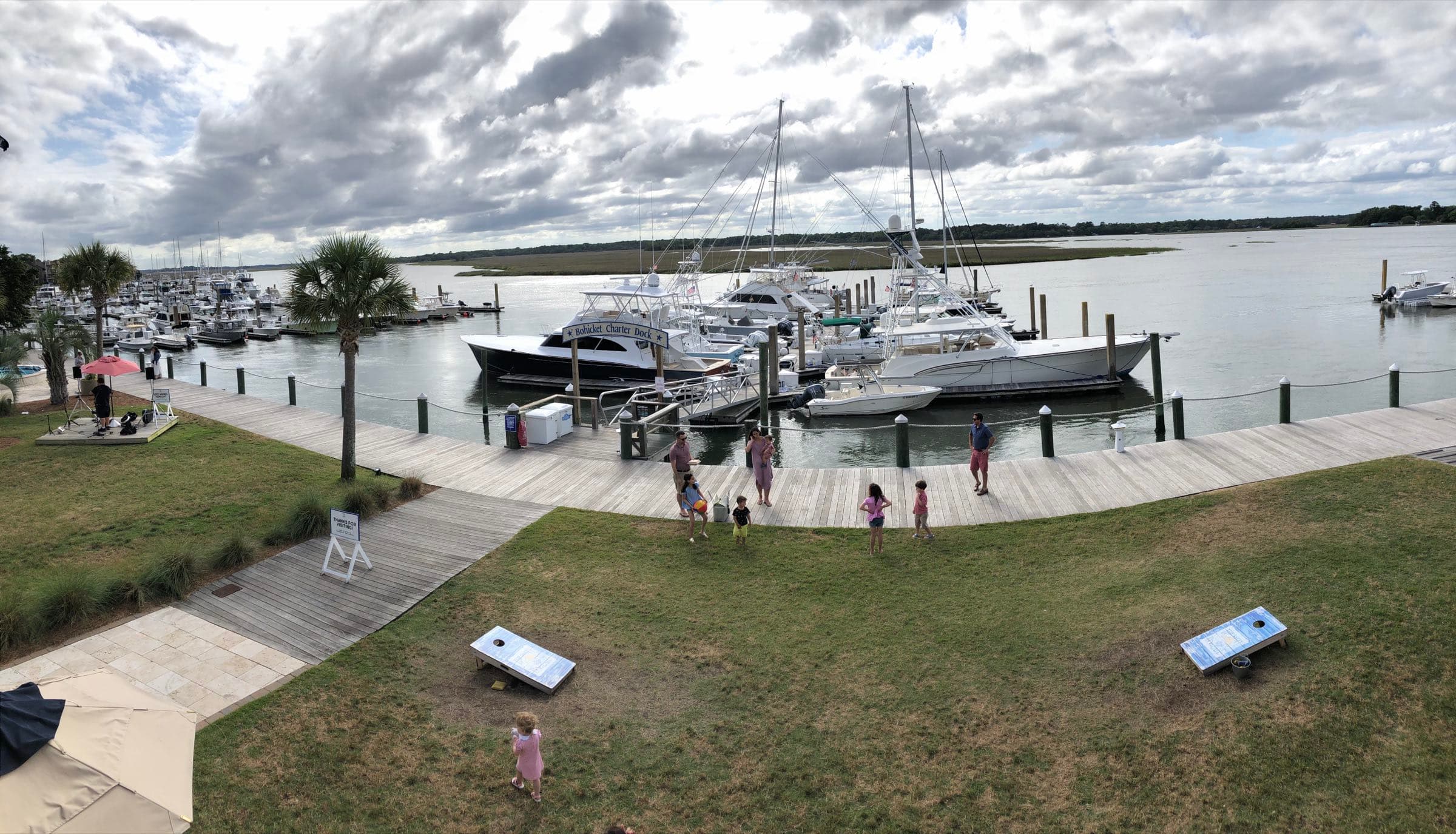
Boats in the slips at Bohicket Marina
Photo: chucka_nc, CC BY-SA 2.0, via Wikimedia Commons (resized)
Two ways in
Talk it through with Mike, or ask Val — the guide’s AI assistant, answering from this site’s sourced facts.