

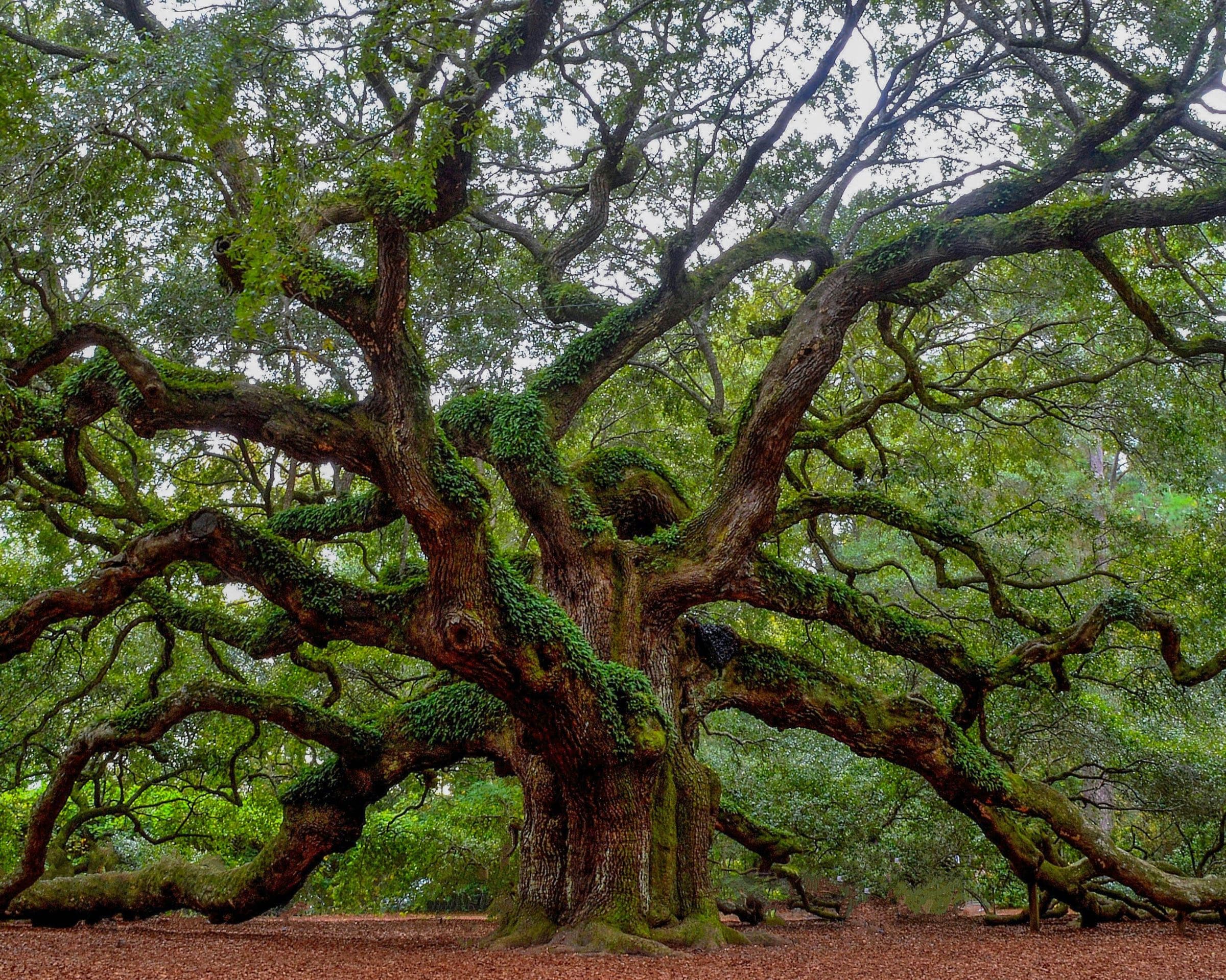
3688 Angel Oak Road · Johns Island
The Angel Oak’s real story
Who owned the land it grows on, what it meant to the Gullah community, how a telephone company and then the City came to hold it — and its honest age.
Last verified
Photo by Andrew Shelley on Unsplash
The tree
- About 65 feet tall and 25.5 feet around, shading some 17,000 square feet. City of Charleston
- Its longest limb runs 187 feet. National Register (SC SHPO)
- Age: an estimated 400 to 500 years, from recent studies cited by the National Register; the City says 300 to 400. Claims of 1,000-plus years are unsupported, the nomination says. National Register (SC SHPO) · City of Charleston
Visiting
Free, every day but holidays
A City of Charleston park at 3688 Angel Oak Road: free, open seven days, closed on holidays. Wedding and engagement photo shoots need a City permit. City of Charleston
The Tea Garden and Deep Water Vineyard on Wadmalaw make a day of it — see charters & excursions.
Who held the land
- Colonial eraAbraham Waight (1650–1718), a Quaker planter, acquires the land in the early colonial years. National Register (SC SHPO)
- 1800sMartha Waight (1794–1878), his great-granddaughter, marries Justus Angel (1779–1836); the plantation and the tree take the Angel name. Angel Plantation grew rice and cotton through enslaved labor. National Register (SC SHPO)
- 1866Freed tenant farmers work the land near Angel Plantation, growing cotton, corn and potatoes. National Register (SC SHPO)
- 1920sThe tree becomes a tourist stop; a 1927 photograph is the earliest evidence of outside visitors. Over the years it was also a recreation site for Black students. National Register (SC SHPO)
- 1930Margaret Angel Bolt, a granddaughter of Justus and Martha, is back on the land with her husband, a truck farmer and surveyor. The land stays with Waight and Angel descendants until 1959. National Register (SC SHPO)
- 1959Hurricane Gracie tears off large limbs. The Mutual Land and Development Corporation — a telephone company running lines along Bohicket Road — buys the 2.1 acres around the tree and leases it to the Agricultural Society of South Carolina. National Register (SC SHPO)
- 1991The City of Charleston buys the parcel. Land around it is under a conservation easement held by the City and the Lowcountry Land Trust. National Register (SC SHPO)
- May 21, 2026The Angel Oak is listed on the National Register of Historic Places — for its place in Johns Island’s Gullah community from 1865 through 1976. National Register (SC SHPO)
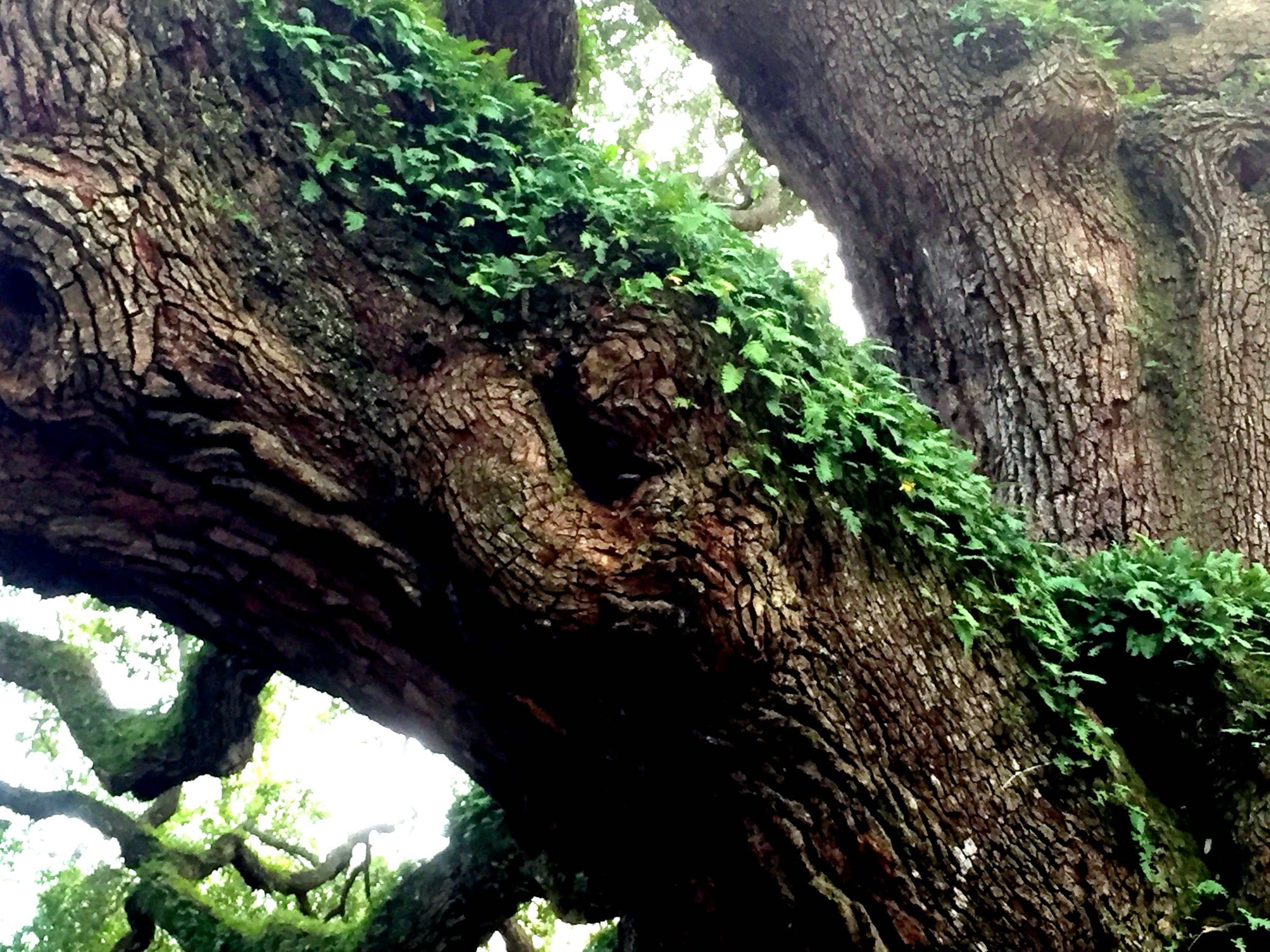
Ferns along one of the Angel Oak’s limbs
Photo: MadeYourReadThis, CC BY-SA 4.0, via Wikimedia Commons (resized)
What it means
- The Angel Oak’s 2026 listing honors it as a cultural and spiritual landmark of Johns Island’s Gullah community from 1865 through 1976, rooted in oral tradition going back to the first generation of freedpeople. National Register (SC SHPO)
The rest of that story — the praise houses, the churches and the land freedpeople took up — is on Gullah Geechee on the islands.
Quick answers
How old is the Angel Oak?
An estimated 400 to 500 years, from recent studies cited in its 2026 National Register nomination. The City of Charleston says 300 to 400. The nomination calls claims of more than 1,000 years unsupported.
Why is it called the Angel Oak?
For Justus Angel (1779–1836) and his wife, Martha Waight Angel (1794–1878), a great-granddaughter of the Quaker planter Abraham Waight. The plantation it stood on, and then the tree, took the Angel name.
Who owns the Angel Oak?
The City of Charleston, since 1991. The land around it is under a conservation easement held by the City and the Lowcountry Land Trust.
Is it free to visit the Angel Oak?
Yes. It’s a City of Charleston park at 3688 Angel Oak Road on Johns Island, open seven days a week and closed on holidays. Wedding and engagement photo shoots need a City permit.
Sources
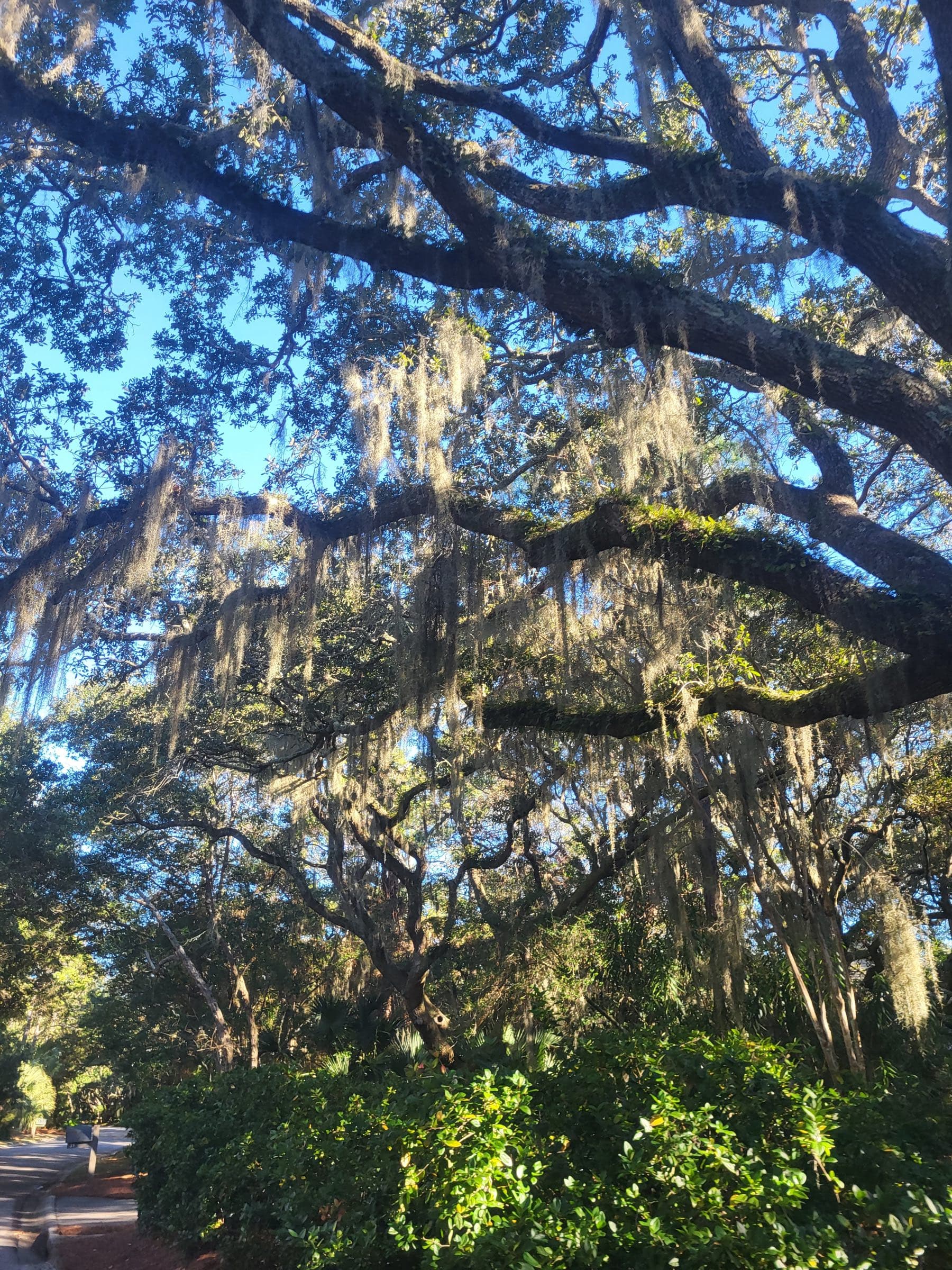
Live oaks and Spanish moss on Kiawah
Photo: JulDer Wiki, CC BY 4.0, via Wikimedia Commons (resized)
Two ways in
Talk it through with Mike, or ask Val — the guide’s AI assistant, answering from this site’s sourced facts.