

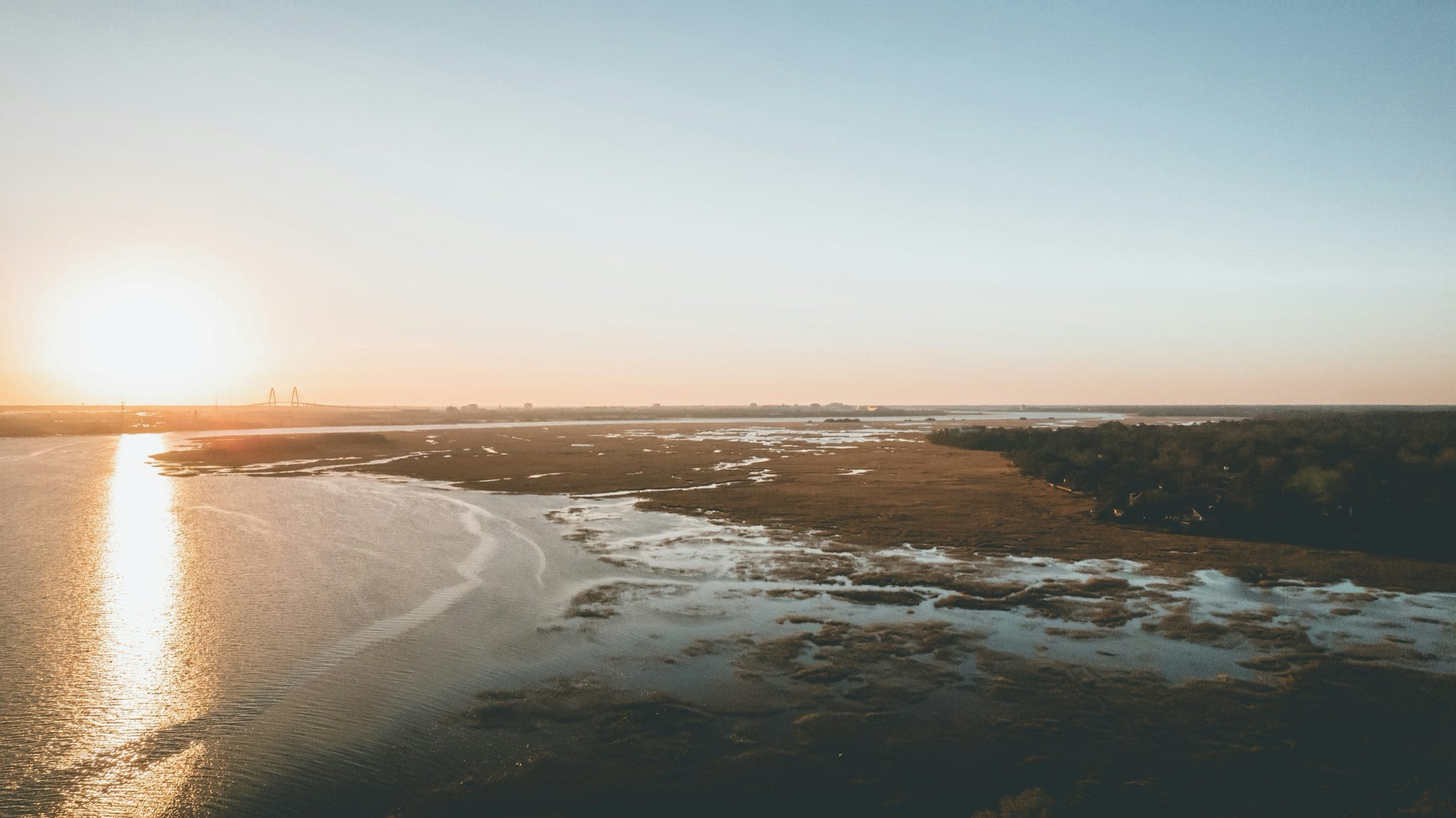
Johns Island · Wadmalaw · the Sea Islands
Gullah Geechee on the islands
The people who did the work of the plantations, who took up the land when freedom came, and who built the praise houses and churches that still stand on Johns Island. Told from the National Register, the South Carolina Encyclopedia and the National Park Service, line by line.
Last verified
Photo by Cody Silver on Unsplash
A language spoken nowhere else
- Gullah, also called Geechee, formed as a shared creole among Africans from Senegambia to Angola who were brought through the Charleston area. SC Encyclopedia
- The National Park Service calls it a creole language spoken nowhere else in the world. National Park Service
- In the 1940s the linguist Lorenzo Dow Turner documented its West African words and grammar. Two of its words: “day clean” for dawn, and “oonuh” for you. SC Encyclopedia
The heritage corridor
- October 12, 2006Congress designates the Gullah Geechee Cultural Heritage Corridor, from Pender County, North Carolina, to St. Johns County, Florida. National Park Service
- Johns Island was included in the corridor in 2006, the Angel Oak’s National Register nomination states, citing the Park Service’s management plan. National Register (SC SHPO)
The corridor’s own site: National Park Service, Gullah Geechee Cultural Heritage Corridor.
St. John’s Colleton Parish, 1790–1860
Under slavery
Rice and indigo, then Sea Island cotton, were grown on these islands by enslaved people. The counts, from the parish’s records:
- In 1790 St. John’s Colleton Parish — Johns, Wadmalaw, Edisto, Seabrook and Kiawah — counted 600 white residents, 4,660 enslaved people and 40 free Black residents. Enslaved people were about 88 percent of the parish. SC Encyclopedia
- By 1850 the parish held 10,332 enslaved people, an average of 75 for every white household; cotton grew on almost all of its 104 plantations by 1849. SC Encyclopedia
- Across the Sea Islands, enslaved people sometimes outnumbered white residents ten to one. SC Encyclopedia
- On Angel Plantation the recorded work included field hands, wagoners, blacksmiths, cooks, maids and laundresses. National Register (SC SHPO)
- Enslaved laborers helped build Fort Trenholm in 1864. National Register (SC SHPO)
Freedom, and the land
- January 16, 1865Sherman’s Special Field Orders No. 15 sets aside “the islands from Charleston, south” for freedpeople, up to 40 acres of tillable land per family. Freedmen and Southern Society Project
- 1865A Freedmen’s Bureau survey finds nearly all Charleston County plantations abandoned by planters and occupied by freedpeople born on them. National Register (SC SHPO)
- 1866Labor contracts and tenant farming begin. A freedman on the Gregg plantation signs a contract with James Hopkinson for himself and 13 others; freed tenant farmers work near Angel Plantation, growing cotton, corn and potatoes. National Register (SC SHPO) · National Register (SC SHPO) (2)
- Most former plantations were cut into narrow tenant tracts. Some freedpeople bought land; most stayed tenants of white landowners. A 1988 oral history says the whole west side of Bohicket Road along Bohicket Creek was “sold out” to Black farmers. National Register (SC SHPO)
- 1880Peter Green, a Black farmer, buys a tract on the former Hopkinson Plantation; in 1884–85 he sells one acre to Hebron’s trustees. National Register (SC SHPO)
- 1895A new state constitution strips most rights from Black citizens. National Register (SC SHPO)
- Into the 1900s Johns Island stays majority-Black and agricultural: truck farming, tenant farming and, more and more, wage work in Charleston and later on Kiawah and Seabrook. National Register (SC SHPO) · National Register (SC SHPO) (2)
How the islands’ farms grew from here — truck farming, the crews, Esau Jenkins and Rural Mission — is on the Johns Island tomato.
Praise houses, and the churches freedpeople built
- Praise houses were plain buildings enslaved people put up for weeknight worship and the ring shout. After emancipation some served as schools and meeting halls. SC Encyclopedia
- Moving Star Hall on River Road, built about 1917, was the praise house and hall of the Moving Star Young Association, which ran a tend-the-sick and burial society into the mid-1970s. It was listed on the National Register in 1982. The praise-house tradition it carries is older than the building — antebellum. National Register (SC SHPO) · SC Encyclopedia
- The Angel Oak’s 2026 listing honors it as a cultural and spiritual landmark of Johns Island’s Gullah community from 1865 through 1976, rooted in oral tradition going back to the first generation of freedpeople. National Register (SC SHPO)
Congregation 1710; church 1822–23
Johns Island Presbyterian Church
Box pews and the upper gallery where enslaved people worshiped. Survived the Civil War and the 1886 earthquake. 2550 Bohicket Road; on the National Register since 1975. SC Encyclopedia · National Register (SC SHPO)
1867
Zion Presbyterian
Founded by freedpeople. The first building is gone; the congregation merged with Hebron in the 1990s. National Register (SC SHPO)
1873
Hebron and Bethel Presbyterian
Organized by freedpeople; Hebron had 75 members and 12 pupils that year. National Register (SC SHPO)
c. 1875
Promise Land Reformed Episcopal Church
3972 Betsy Kerrison Parkway. National Register (SC SHPO)
1884–85
Hebron Presbyterian Church
Built with Presbyterian freedmen’s-mission funds on an acre sold by Peter Green. Knocked off its piers by Hugo in 1989. With Promise Land, one of only two 19th-century churches left on Johns Island. 4058 Betsy Kerrison Parkway; National Register 2025. National Register (SC SHPO)
c. 1917
Moving Star Hall
Praise house and society hall. 3104 River Road; National Register 1982. National Register (SC SHPO)
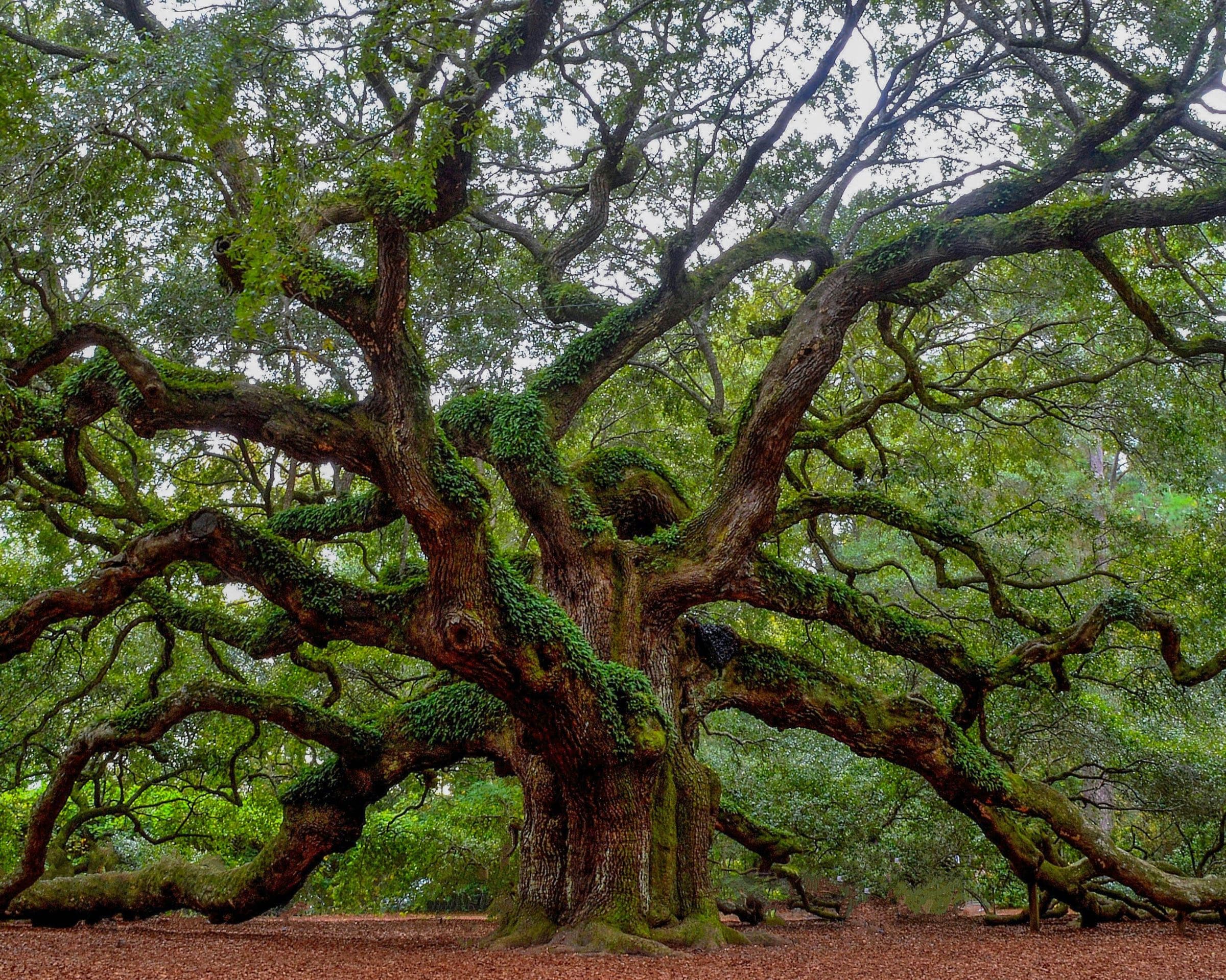
The Angel Oak — a Gullah landmark, on the National Register since 2026
Photo by Andrew Shelley on Unsplash
The Progressive Club
- 1957The first Citizenship School class meets at the Progressive Club on Johns Island; the club’s Sea Island Center building goes up in 1963. National Register (SC SHPO)
The club, Esau Jenkins and the Citizenship Schools are told with the island’s farm history on the Johns Island tomato; the tree’s story is on the Angel Oak.
Visiting with respect
The churches are active congregations and Moving Star Hall is private. See them from the road; the Angel Oak is the one to walk up to.
3688 Angel Oak Road
Angel Oak
A free City park, open seven days, closed holidays. National Register (SC SHPO) · City of Charleston
2550 Bohicket Road
Johns Island Presbyterian Church
An active church; see it from the road and the county marker. National Register (SC SHPO) · Charleston County markers
4058 Betsy Kerrison Parkway
Hebron Presbyterian Church
Seen from the parkway. National Register (SC SHPO)
3104 River Road
Moving Star Hall
Seen from River Road; treat it as private. National Register (SC SHPO)
3377 River Road
The Progressive Club
County marker 10-81 at River Road and Royal Oak Drive. National Register (SC SHPO) · Charleston County markers
Quick answers
What is Gullah Geechee?
The culture of the descendants of Africans enslaved on the Sea Islands and coast from North Carolina to Florida. Its language, Gullah — also called Geechee — formed as a shared creole among Africans from Senegambia to Angola brought through the Charleston area; the National Park Service calls it a creole spoken nowhere else in the world.
Is Johns Island in the Gullah Geechee Cultural Heritage Corridor?
Yes. Congress created the corridor on October 12, 2006, from Pender County, North Carolina, to St. Johns County, Florida, and the Angel Oak’s National Register nomination states that Johns Island was included in 2006.
What is a praise house?
A plain building enslaved people put up for weeknight worship and the ring shout. After emancipation some became schools and meeting halls. Moving Star Hall on River Road, built about 1917, carries the tradition on Johns Island.
What happened to the land on Johns Island after the Civil War?
In 1865 the Freedmen’s Bureau found nearly every Charleston County plantation occupied by freedpeople born on it. Labor contracts and tenant farming followed in 1866; most plantations were cut into narrow tenant tracts. Some freedpeople bought land — a 1988 oral history says the whole west side of Bohicket Road was sold to Black farmers.
The whole islands’ story, island by island, is on the history page. Have a family record or a correction? Tell us.
Sources
- South Carolina Encyclopedia, “St. John’s Colleton Parish” (Michael S. Reynolds)
- South Carolina Encyclopedia, “Moving Star Hall” (W. Scott Poole)
- South Carolina Encyclopedia, “Praise houses” (W. Scott Poole)
- South Carolina Encyclopedia, “Sea Islands” (Caroline Foster)
- South Carolina Encyclopedia, “Gullah” (M. Alpha Bah)
- South Carolina Encyclopedia, “Johns Island Presbyterian Church”
- SC Historic Property Record: Angel Oak (National Register nomination, listed May 21, 2026)
- SC Historic Property Record: Hebron Presbyterian Church (National Register nomination, listed April 28, 2025)
- SC Historic Property Record: Moving Star Hall
- SC Historic Property Record: The Progressive Club
- SC Historic Property Record: John’s Island Presbyterian Church
- Charleston County GIS, historical markers layer
- National Park Service, Gullah Geechee Cultural Heritage Corridor
- Freedmen and Southern Society Project (University of Maryland), Special Field Orders No. 15
- City of Charleston, “Angel Oak”
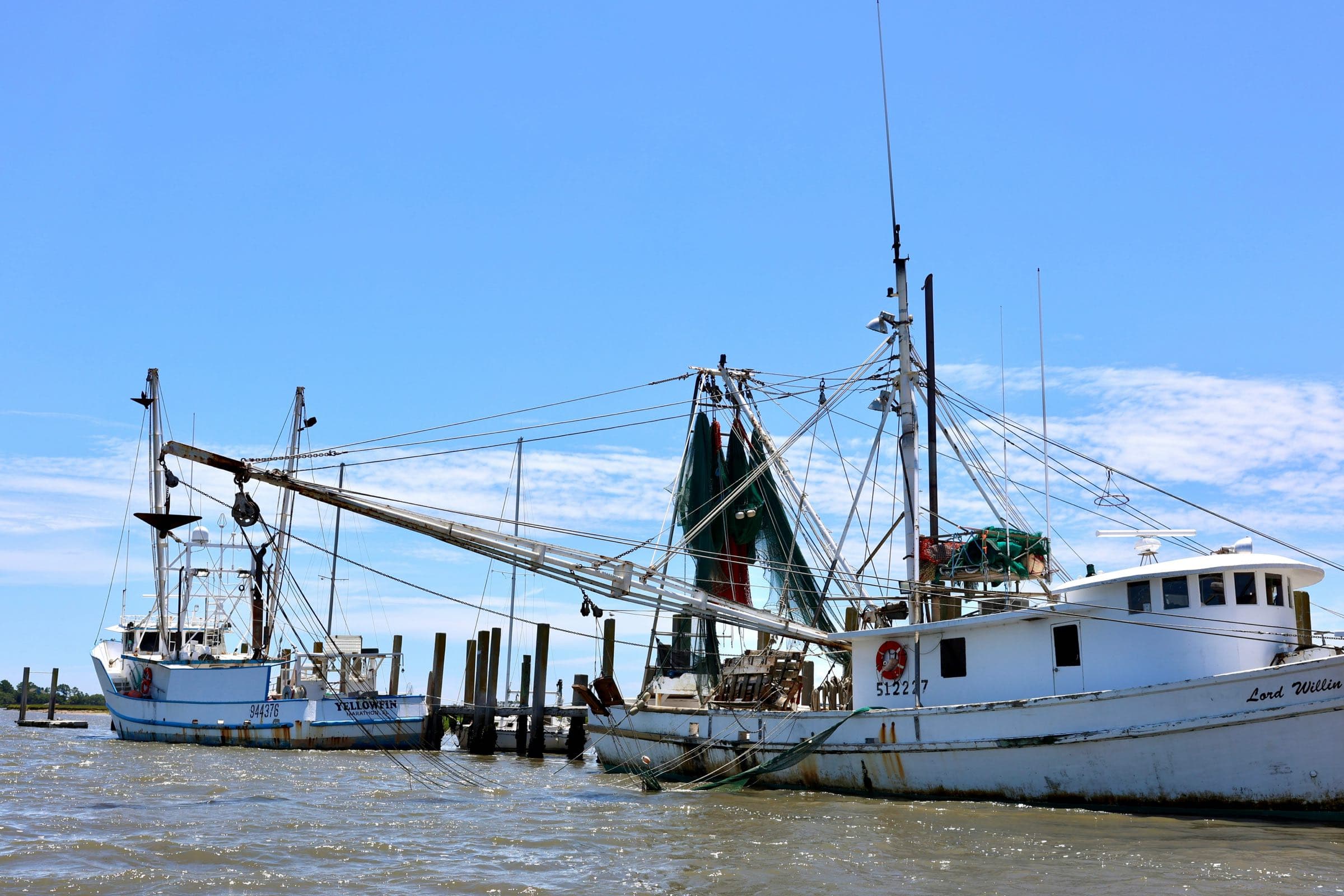
Shrimp boats in the Lowcountry
Photo by Scott Greer on Unsplash
Two ways in
Talk it through with Mike, or ask Val — the guide’s AI assistant, answering from this site’s sourced facts.