

1861–1865 · the Stono · River Road
The Civil War on Johns Island
A gunboat duel on Christmas Day, a fight at the Seabrook line, a July battle on River Road where the US Colored Troops faced the sons of the plantations — and a fort under today’s airport. Every line sourced.
Last verified
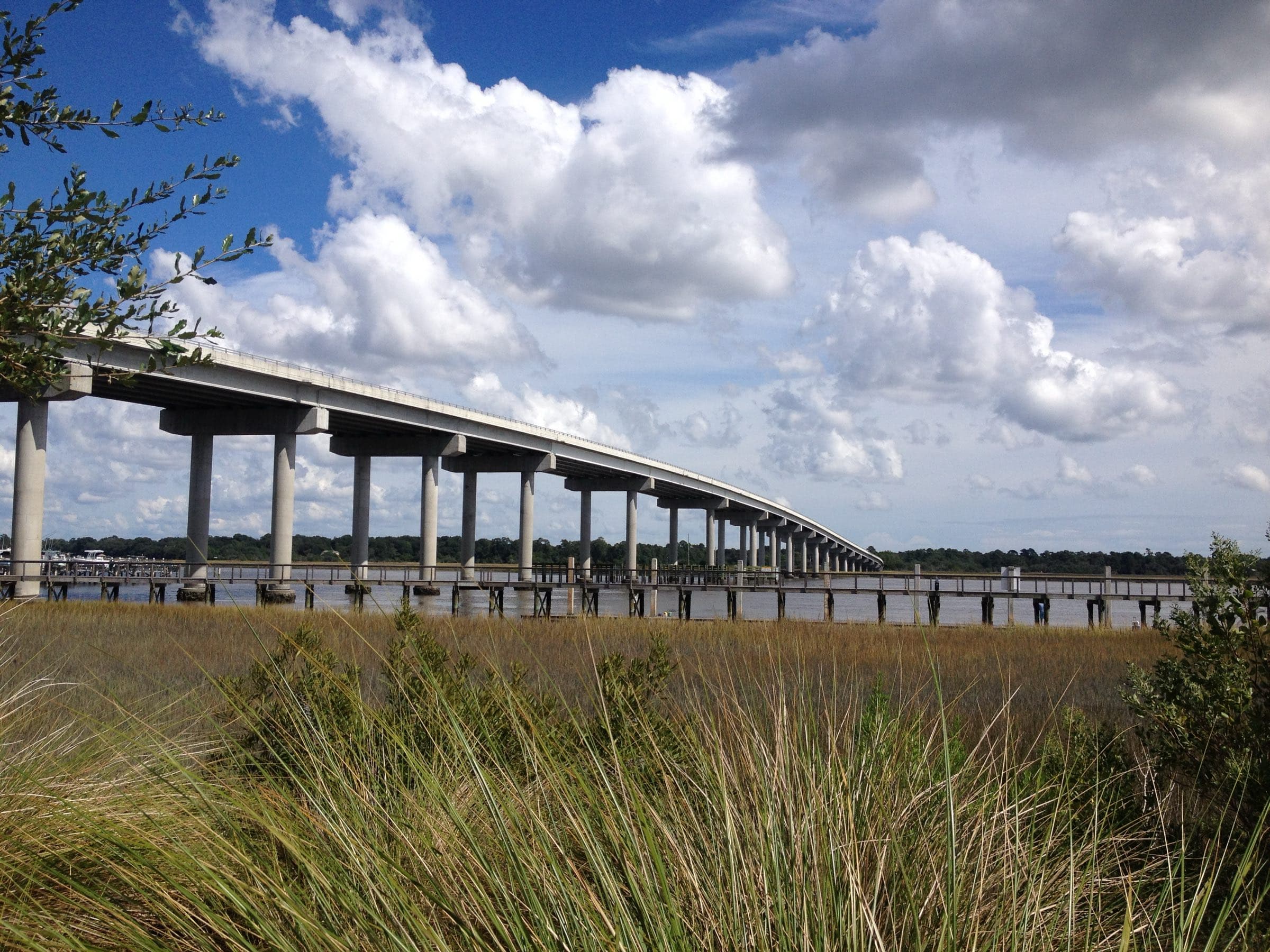
Photo: Cantbeatpie, CC BY-SA 3.0, via Wikimedia Commons (resized)
1861
The islands emptied
- The Confederate Army ordered the Sea Islands abandoned. On Kiawah the Gibbes and Vanderhorst families left; on Seabrook, William Seabrook’s children sold to the Gregg family in 1863. Town of Seabrook Island · Town of Kiawah Island
December 25, 1863
Christmas Day in the Stono: Robert Blake
- Confederate artillery on Johns Island opened fire on the gunboat USS Marblehead in the Stono off Legareville. The Marblehead held, and the Confederates withdrew, leaving a gun and a caisson behind. Naval Historical Center
- Robert Blake, a sailor who had escaped slavery, kept the Marblehead’s rifle gun in action under fire. He received the Medal of Honor. Naval Historical Center
February 9–11, 1864
Haulover Cut
- About 2,500 Union troops under Gen. Alexander Schimmelfennig crossed Kiawah and Seabrook to the bridge at Haulover Cut, the channel between Seabrook and Johns Island, as a diversion for an operation in Florida. Local cavalry and the Stono Scouts held; two Citadel cadets were killed. The Union withdrew on the night of February 10–11. Johns Island Conservancy · SC Encyclopedia
- The Town of Seabrook says the fight lasted three days and cost 34 lives; no other source we read gives a total. Town of Seabrook Island
July 1864
Burden’s Causeway — “Bloody Bridge”
- In early July more than 4,000 Union troops under Brig. Gen. John Hatch marched into Johns Island from Seabrook, aiming to cut the Charleston & Savannah Railroad. They landed July 2. National Register (SC SHPO) · Post and Courier · SC Encyclopedia
- About 2,000 South Carolina cavalry and militia, many from sea-island planter families, held rifle pits along Burden’s Creek. The Union force included US Colored Troops — about 1,000 men of the 26th USCT, many of them from the same plantations. Post and Courier
- The last Union assault came July 9, and Hatch withdrew that night. Halleck’s report counts more than 300 Union killed, wounded or missing, three of them from sunstroke. Post and Courier
- The story that wounded men were bayoneted and buried in pits is a legend, the Post and Courier’s account notes. Post and Courier
- The site is where River Road meets Plow Ground Road. County marker 10-50, “Federal Expedition on John’s Island / Battle of Burden’s Causeway,” stands nearby. National Register (SC SHPO) · Charleston County markers
Late 1864
Fort Trenholm, under the airport
- A large three-sided earthwork guarding the Stono and the western flank of the James Island batteries, with emplacements for 17 guns and 14 heavy cannon when it was captured. It was named for the Confederate Treasury Secretary George A. Trenholm. Enslaved laborers helped build it. National Register (SC SHPO) · National Register (SC SHPO) (2)
- It lies on the grounds of today’s Charleston Executive Airport — that’s why the airport’s road is Fort Trenholm Road. Listed on the National Register in 1982; we found no public access. National Register (SC SHPO) · Charleston Regional Aviation Authority
1865
After the war
- Freedpeople took up the land they had worked: the Freedmen’s Bureau found nearly every Charleston County plantation occupied by people born on it. That story is on the Gullah Geechee page. National Register (SC SHPO)
Read on: freedom, and the land.
Where to see it
16.8 miles, from Main and Chisolm Roads around to Bohicket Road
River Road
A public road — drive it. National Register (SC SHPO)
River Road at Plow Ground Road
Burden’s Causeway battlefield
County marker 10-50. Charleston County markers
Charleston Executive Airport
Fort Trenholm
On airport property; we found no public access. National Register (SC SHPO)
The Revolution came through here too — Stono Ferry in 1779 and Clinton’s march in 1780 are on the history page.
Quick answers
Were there Civil War battles on Johns Island?
Yes. The Battle of Legareville in the Stono on Christmas Day 1863, the fight at Haulover Cut on the Seabrook line in February 1864, and the Battle of Burden’s Causeway — “Bloody Bridge” — on River Road in July 1864.
Who was Robert Blake?
A sailor who had escaped slavery. On December 25, 1863, he kept the USS Marblehead’s rifle gun firing under Confederate artillery in the Stono off Legareville, and received the Medal of Honor.
Where was the Battle of Burden’s Causeway?
Where River Road meets Plow Ground Road on Johns Island. More than 4,000 Union troops, about 1,000 of them from the 26th US Colored Troops, attacked about 2,000 South Carolina cavalry and militia in early July 1864; the last assault was July 9. County marker 10-50 stands nearby.
What is Fort Trenholm?
A Confederate earthwork built late in 1864 to guard the Stono, named for Treasury Secretary George A. Trenholm. It lies on the grounds of today’s Charleston Executive Airport and is on the National Register; we found no public access.
Sources
- Town of Kiawah Island, “History”
- Town of Seabrook Island, “Early History”
- South Carolina Encyclopedia, “Charleston, Siege of (1863–1865)”
- SC Historic Property Record: River Road (National Register nomination, listed June 3, 2026)
- SC Historic Property Record: Hebron Presbyterian Church (National Register nomination, listed April 28, 2025)
- SC Historic Property Record: Fort Trenholm
- Charleston County GIS, historical markers layer
- Naval Historical Center, “Robert Blake” (Department of the Navy)
- Post and Courier, Bo Petersen, “Obscure Civil War battle fought on Johns Island” (2010)
- Johns Island Conservancy, “The Battle of Haulover Cut” (the page cites no sources)
- Charleston Regional Aviation Authority, “About JZI”
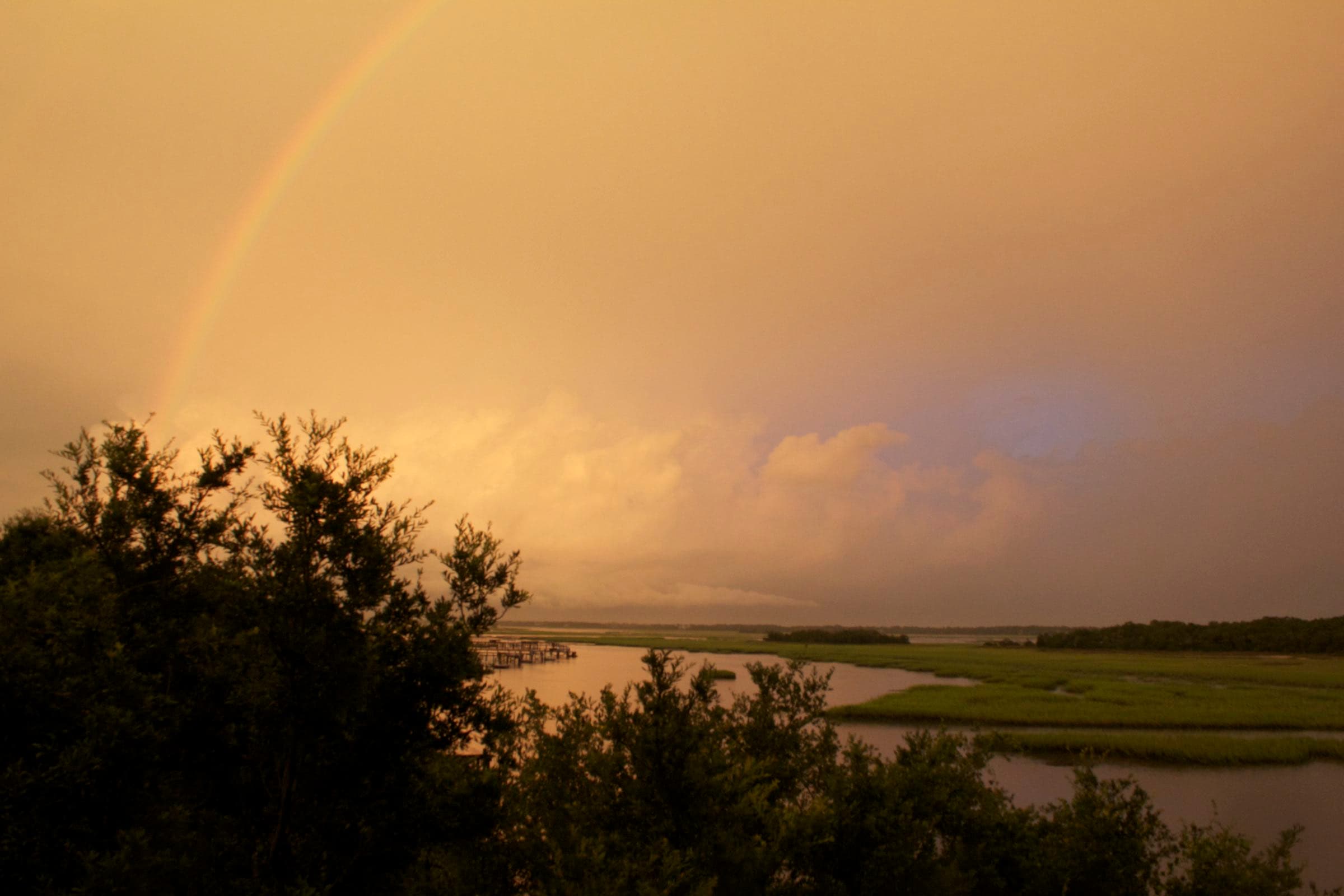
The Kiawah River after a storm
Photo: DThomson7 (Debra Thomson), CC BY-SA 3.0, via Wikimedia Commons (resized)
Two ways in
Talk it through with Mike, or ask Val — the guide’s AI assistant, answering from this site’s sourced facts.